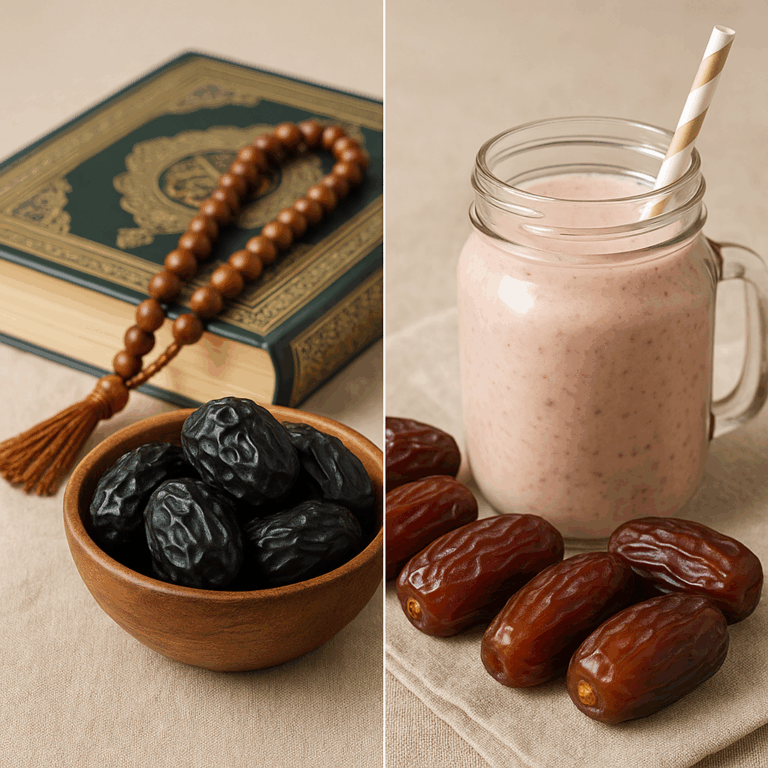

Dates for Kids & Babies: Age Guide, Benefits & Recipes
Dates are a naturally sweet, nutrient-dense food that many parents want to introduce early, both for their nutritional value and, for Muslim families, their connection to the tradition of tahneek. But dates also come with a real and important safety consideration: their sticky, chewy texture makes whole or chopped dates a genuine choking hazard for babies and young toddlers.
This guide covers when and how to safely introduce dates to babies and children, the nutritional benefits for growing kids, and simple, age-appropriate ways to prepare them — along with the safety precautions every parent should know first.
Key Takeaways
- Most guidance suggests introducing dates around 6 months, once solids have started, always in mashed or pureed form.
- Whole or chopped dates are a choking hazard for babies and young toddlers due to their sticky, chewy texture.
- Tahneek, a Sunnah practice, involves rubbing a small piece of softened date on a newborn’s palate shortly after birth.
- Dates offer fiber, potassium, and iron, making them a nutritious alternative to processed sugary snacks for children.
- Good oral hygiene matters when dates are a regular part of a child’s diet, since their stickiness and sugar content can contribute to tooth decay.
Are Dates Safe for Babies and Kids?
Dates themselves are a nutritious, naturally sweet food that can be a safe and beneficial addition to a baby’s or child’s diet — but preparation is everything. Their sticky texture and small size make whole dates unsuitable for infants and young toddlers, since they present a genuine choking risk similar to other sticky or chewy foods. When properly prepared — pureed, mashed, or cooked into a soft form — dates can be introduced safely as part of a baby’s expanding diet.
As with introducing any new food, it’s always worth checking with your pediatrician first, particularly if your baby has any known allergies or digestive sensitivities.
What Age Can Babies Start Eating Dates?
Most general infant feeding guidance suggests dates can be introduced around 6 months of age, once a baby has started solid foods and is developmentally ready for purees. At this stage, dates should always be soaked, then blended or mashed into a smooth consistency — never offered whole or in chunks. As children grow into toddlers and develop better chewing ability, finely chopped, softened dates mixed into other foods can gradually be introduced, though whole dates generally aren’t recommended until a child is older and can safely manage chewy textures.
Tahneek: The Islamic Tradition of Dates for Newborns
For many Muslim families, dates hold a special role even before a baby starts solid food, through the practice of tahneek — softening a small piece of date and gently rubbing it on a newborn’s palate shortly after birth. This Sunnah tradition is typically performed by a respected family member or religious figure as a way of welcoming the child. For the fuller religious and historical context behind this practice, see our comprehensive guide to dates in Islam.
Quick Reference: Dates for Kids
Introduce around: 6 months (pureed only) | Never give: Whole or chunky dates to babies/toddlers | Best prep: Soaked, blended, mashed | Watch for: Choking risk and tooth decay
Health Benefits of Dates for Growing Children
Dates offer a nutrient-dense alternative to processed, sugary snacks, providing dietary fiber, potassium, and iron alongside their natural sweetness. For growing children, this combination may support healthy digestion and provide a steadier source of energy compared to refined sugar snacks. Iron in particular is a nutrient young children often need more of, making dates — prepared safely — a reasonable addition to a varied, balanced diet.
Baby-Led Weaning with Dates: How to Prepare Safely
Dates can be incorporated into baby-led weaning approaches, but always in a form that eliminates choking risk. Rather than offering a whole or chopped date, blend soaked dates into a smooth puree that can be mixed into oatmeal, yogurt, or another soft food your baby is already eating. This allows babies to experience the flavor and benefit from the nutrition without the safety risk associated with the fruit’s naturally sticky, chewy texture.
Choking Hazard: Safety Tips for Parents
Dates are one of several foods parents should be especially cautious with due to choking risk, alongside foods like whole grapes, nuts, and popcorn. Their sticky texture means small pieces can adhere to the airway more easily than drier foods. Always supervise young children while eating, ensure dates are appropriately pureed or finely prepared for their age, and consider taking an infant/child CPR and choking-response course if you haven’t already, as general preparedness for any feeding stage.
Simple Date Recipes for Toddlers
Once a child is old enough to safely manage more texture, simple date-based snacks can be a nutritious treat. Our easy no-bake date balls recipe can be adapted for older toddlers by ensuring the dates are well-blended into a smooth, cohesive mixture rather than left in chunky pieces. For more general inspiration once your child is past the highest-risk toddler stage, our full collection of desserts with dates offers further ideas, though always check texture and portion suitability for your child’s specific age.
How Many Dates Should Kids Eat?
There’s no single universal number, but many parents offer toddlers a modest portion — roughly half to one date’s worth in mashed or finely prepared form — being mindful of natural sugar content and how it fits into the child’s overall daily diet. As children get older, portions can gradually increase in line with general healthy-snacking guidance. Good oral hygiene, including brushing after sticky, sugary snacks like dates, is especially important for children who eat them regularly.
Frequently Asked Questions
At what age can babies start eating dates?
Most guidance suggests introducing dates around 6 months of age, once a baby has started solid foods, and always in a well-mashed, pureed, or safely prepared form to reduce choking risk. Always check with your pediatrician before introducing new foods.
Are dates a choking hazard for babies?
Whole or chopped dates can be a choking hazard for infants and young toddlers due to their sticky, chewy texture. Dates should be pureed, finely mashed, or cooked into a soft paste for younger children rather than given whole.
What is tahneek and why are dates used for newborns?
Tahneek is an Islamic practice where a small piece of softened date is gently rubbed on a newborn’s palate shortly after birth, traditionally performed by a family member or religious figure as a way of welcoming the child.
Are dates healthy for growing children?
Dates offer natural sweetness along with fiber, potassium, and iron, making them a nutrient-dense alternative to processed sugary snacks for children, when given in age-appropriate forms and reasonable portions.
Can dates be used for baby-led weaning?
Dates can be incorporated into baby-led weaning once prepared safely, such as blended into soft purees, mixed into oatmeal, or cooked into soft snacks, rather than offered whole due to choking risk.
How many dates can a toddler eat per day?
There’s no strict universal number, but many parents offer toddlers a small portion, such as half to one date equivalent in mashed or chopped form, being mindful of natural sugar content and overall daily diet.
Can dates help with constipation in babies and toddlers?
The fiber content in dates may help support regular digestion in some children, though any persistent digestive concerns in babies or toddlers should be discussed with a pediatrician rather than addressed through diet alone.
Do dates cause tooth decay in children?
Because dates are sticky and high in natural sugar, they can contribute to tooth decay if children’s teeth aren’t cleaned afterward, so good oral hygiene is especially important when dates are a regular part of a child’s diet.
What is the best way to prepare dates for a baby?
For babies starting solids, dates are best soaked, then blended or mashed into a smooth puree, either on their own or mixed into oatmeal, yogurt, or another soft food, avoiding any whole or chunky pieces.
Are Ajwa dates specifically good for children?
Ajwa dates share the same core nutritional benefits as other date varieties and are also connected to the tradition of tahneek, making them a meaningful and nutritious choice for many Muslim families introducing dates to a newborn or child.
Sources & References
- American Academy of Pediatrics — Guidance on introducing solid foods and choking hazards
- National Center for Biotechnology Information (NCBI) — Nutritional composition of date fruit
- Healthline — Dates: Nutrition, Benefits, and How to Eat Them
- WebMD — Feeding Guidelines for Infants and Toddlers
- USDA FoodData Central — Dried fruit nutritional reference data

John A. Kareem is a natural wellness writer and researcher passionate about Ajwa dates and traditional Arabian foods.
At Ajwa Dates, he shares evidence-based, easy-to-read content that helps readers discover the real health benefits of dates and other natural ingredients.
His goal is to promote healthy living through authentic, time-tested knowledge.