
Easy No-Bake Date Balls
5 Ingredients. 10 Minutes. Zero Guilt.
Date balls — also called date energy bites or date energy balls — are the ultimate whole-food snack. Naturally sweet, chewy, and packed with fibre, iron, and healthy fats, they require no oven, no refined sugar, and almost zero effort. Just a food processor, a handful of ingredients, and ten minutes of your time.
⭐ Why This Recipe Works: With a 2.86% CTR even at position 24 on Google, this is one of the most searched healthy snack recipes online — and for good reason. People who try no-bake date balls once almost always make them again. This guide shows you exactly how.
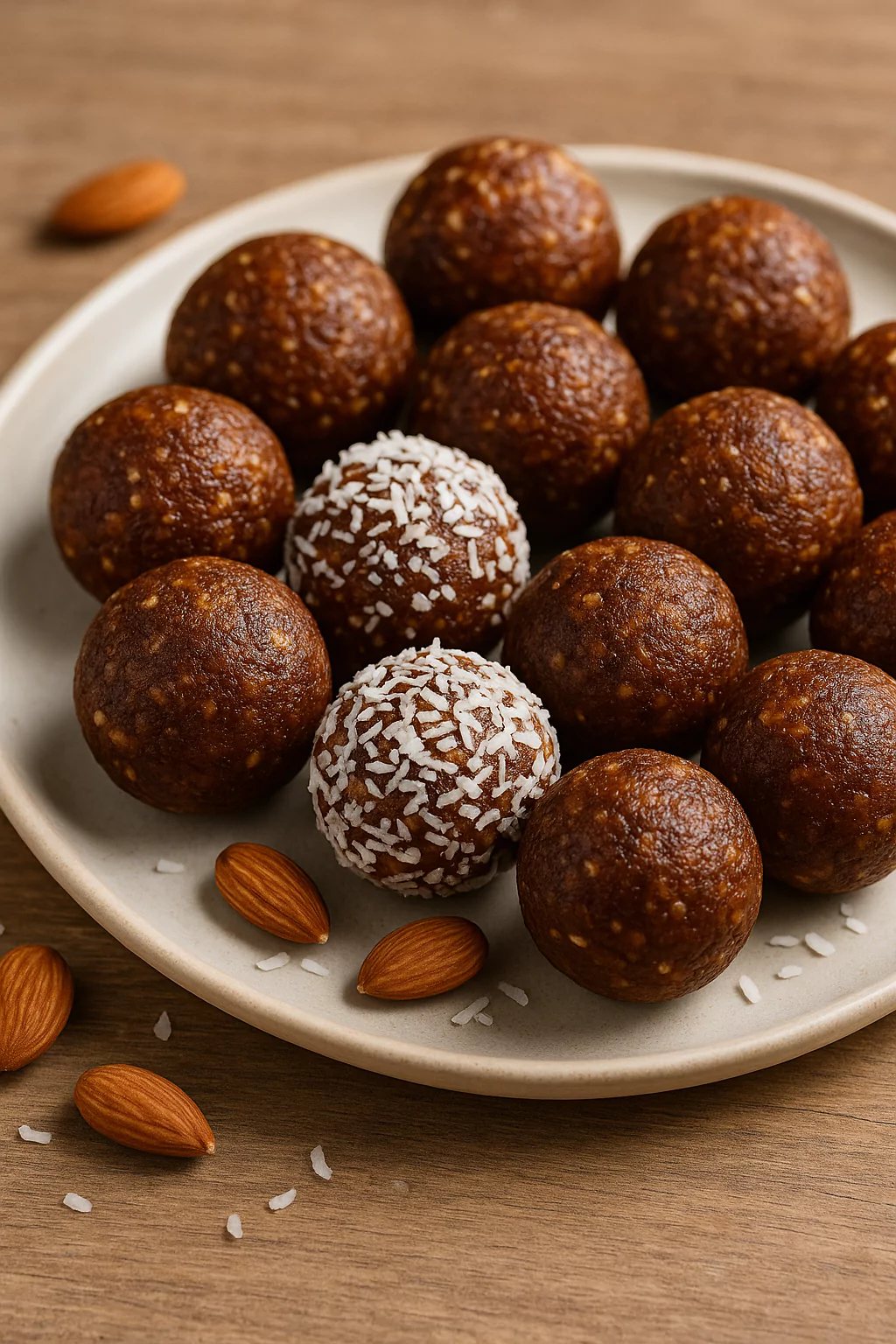
⚡ No Added Sugar
All sweetness comes naturally from whole dates.
🌾 High in Fibre
Supports digestion and keeps you full longer.
🏃 Pre-Workout Fuel
Natural carbs + protein = sustained energy.
🥜 Fully Customisable
8+ flavour variations to suit any taste.
Key Takeaways — What You’ll Learn on This Page
- Why date balls are one of the fastest-growing healthy snack trends globally
- The base 5-ingredient recipe with full step-by-step photo instructions
- 8 flavour variations including chocolate, protein, vegan & Ramadan editions
- Whole food nutritional breakdown per serving with health benefit context
- Fridge vs freezer storage — which is better and how long they last
- Which date variety works best and why Ajwa or Medjool are top picks
There is a reason no-bake date balls have become one of the most searched healthy snack recipes on the internet — and it has nothing to do with food trends or influencer marketing. It is simply because they work. They taste genuinely good. They take almost no time to make. They require no cooking equipment beyond a food processor. And they deliver real, sustained energy from whole natural ingredients in a way that virtually no processed snack bar can match.
Date balls sit at the intersection of ancient nutritional wisdom and modern healthy eating — they are essentially what people across the Middle East and North Africa have been eating for centuries, evolved for the modern kitchen. In this complete guide, we walk you through the base recipe, explain the science behind why it is so nutritious, share eight delicious flavour variations, and give you everything you need to know about storage, ingredient selection, and making these in bulk for the week ahead.
Why No-Bake Date Balls Are So Popular
From gym-goers and busy parents to Ramadan iftar tables and children’s lunchboxes, date energy balls have crossed every demographic and cultural boundary. Here is why.
100% Natural — Nothing Processed
Every ingredient in a date ball is a recognisable whole food. No emulsifiers, no preservatives, no refined sugar, no artificial flavourings. At a time when consumers are increasingly scrutinising ingredient labels, date balls pass with flying colours — the ingredient list is just food.
Fastest Healthy Snack You Can Make
Ten minutes. That is genuinely all it takes from opening the pantry to having a week’s worth of snacks ready in the fridge. For busy parents, professionals, and athletes who want healthy options without investing hours in food prep, date balls are practically unbeatable on the time-to-nutrition ratio.
Real, Sustained Energy
The natural sugars in dates — glucose, fructose, and sucrose — provide fast-acting energy, while the protein and healthy fats from nuts slow absorption and extend the energy curve. This means no blood sugar spike and no crash — just steady, usable fuel for hours. Perfect as a pre-workout snack or mid-morning energy sustainer.
Infinitely Customisable
The base date ball recipe is less a recipe and more a template. Once you understand the ratio of sticky dates to dry ingredients, the flavour possibilities are almost limitless — chocolate, peanut butter, lemon, matcha, protein powder, rose water, cardamom, pistachio. Every variation takes the same ten minutes. See our 8 variations below.
Perfect for Ramadan & Iftar
The Prophet Muhammad (peace be upon him) recommended breaking the fast with dates, and date balls make this Sunnah easy, delicious, and portable. They provide the fast-acting glucose needed to restore blood sugar after fasting, plus the sustained energy from nuts to get through Tarawih prayers without hunger. Learn more about dates in Islamic tradition.
Loved by Kids, Accepted by Parents
Date balls are soft, naturally sweet, compact, and easy for children to eat — making them a practical alternative to processed sweets and candy bars. Parents love them because the ingredient list is completely clean. Children love them because they taste like dessert. Finding a snack that satisfies both is genuinely rare.
5 Ingredients for the Perfect Date Ball
The beauty of no-bake date balls lies in their ingredient simplicity. Five ingredients — each one a whole food with its own nutritional story — combine to create something far greater than the sum of their parts. Quality matters here: use the freshest, softest dates you can find, and choose raw or lightly roasted nuts for maximum nutritional integrity.
- 2 cups pitted dates — Medjool or Ajwa are best (see guide below)
- 1 cup raw almonds — or any nut: walnuts, cashews, pecans
- ½ cup shredded coconut — unsweetened, for coating and texture
- 2 tbsp cocoa powder — for chocolate depth (optional but popular)
- Pinch of sea salt — enhances and balances the natural sweetness
- Optional: 1–2 tbsp water if mixture is too dry
💡 Ingredient Flexibility
This recipe is a template, not a fixed formula. Swap almonds for walnuts or cashews. Replace cocoa with matcha powder or cinnamon. Add oats for extra texture. Stir in chia or flax seeds for extra omega-3s. The only non-negotiable ingredient is the dates — they are the glue that holds everything together both literally and nutritionally.
100% Whole Food Ingredients
No preservatives. No refined sugar. No artificial anything. Just natural ingredients your body recognises and uses efficiently.
Makes approximately 14–18 balls depending on size. Prep time: 10 minutes. No cooking required.
How to Make No-Bake Date Balls
-
1Soak dry dates (if needed) If your dates feel hard or crystallised, cover them in warm water for 5–10 minutes, then drain and pat dry. Fresh Medjool or Ajwa dates usually don’t need soaking — they’re soft enough to process directly.
-
2Add dates and nuts to food processor Add pitted dates and almonds (or your chosen nut) to the bowl of a food processor. Pulse 8–10 times until the mixture is roughly broken down — you want some texture remaining, not a completely smooth paste.
-
3Add remaining ingredients and process Add coconut flakes, cocoa powder, and sea salt. Process for 20–30 seconds until everything comes together into a sticky mass that holds its shape when pressed between your fingers. If it looks too crumbly, add water one tablespoon at a time.
-
4Taste and adjust Before rolling, taste the mixture and adjust — more cocoa for deeper chocolate flavour, a pinch more salt to balance sweetness, or a drop of vanilla extract for warmth. This is the moment to make it yours.
-
5Roll into balls Scoop heaped tablespoons of mixture and roll firmly between your palms into smooth, even balls. Apply consistent pressure — the mixture will hold together if it has the right moisture level. Aim for golf-ball size or slightly smaller.
-
6Roll in coating (optional) While still slightly sticky, roll each ball in your chosen coating: shredded coconut, sesame seeds, cocoa powder, crushed pistachios, or desiccated coconut. This adds texture, visual appeal, and extra flavour.
-
7Chill and serve Place finished balls on a parchment-lined tray and refrigerate for at least 15–30 minutes. Chilling helps them firm up and hold their shape. They can be eaten immediately but taste even better after a brief chill.
-
8Store and enjoy all week Transfer to an airtight container and refrigerate. They will keep for up to 2 weeks in the fridge. See our full storage guide below.
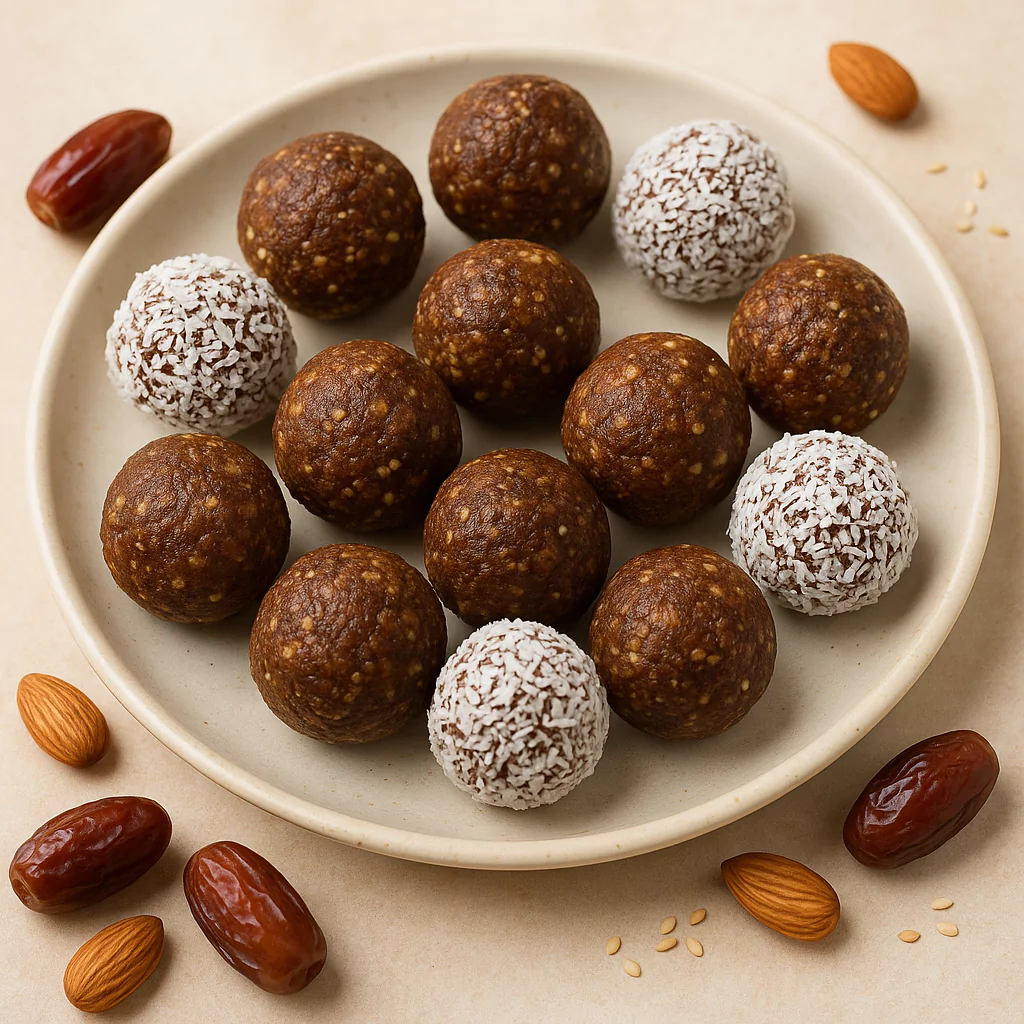
8 No-Bake Date Ball Variations to Try
The base recipe is just the beginning. Each variation below uses the same 10-minute method with a few ingredient swaps that completely transform the flavour profile, nutritional content, or occasion-suitability.
Peanut Butter
Dates + peanut butter + oats
Chocolate Coconut
Dates + cocoa + shredded coconut
Walnut Cinnamon
Dates + walnuts + Ceylon cinnamon
Protein Power
Dates + nuts + protein powder
Vegan Energy
100% plant-based ingredients
Ramadan Rose
Dates + pistachio + rosewater
Lemon Zest
Dates + cashews + lemon zest
Matcha Green
Dates + almonds + matcha powder
Chocolate Coconut Date Balls
Most PopularThe ultimate crowd-pleaser. Rich cocoa combined with the tropical sweetness of coconut and the natural caramel of Medjool dates creates a combination that genuinely tastes like a guilt-free truffle. Roll in extra coconut for a beautiful white exterior. These are the ones that disappear fastest at any gathering.
Add to Base Recipe
- 3 tbsp unsweetened cocoa powder
- ¼ cup extra shredded coconut for rolling
- Optional: 1 tsp vanilla extract
Protein Power Date Balls
Gym-FriendlyDesigned for athletes and anyone who trains regularly, these protein-enhanced date balls deliver a meaningful protein boost alongside the natural carbohydrates and healthy fats of the base recipe. They are ideal as a pre-workout snack or post-training recovery bite. Use a neutral or vanilla-flavoured protein powder for the best taste integration.
Add to Base Recipe
- 2 scoops (60g) vanilla or chocolate protein powder
- 1 tbsp almond butter for extra richness
- 2–3 tbsp water (protein powder absorbs moisture)
Vegan Energy Date Balls
100% Plant-BasedAll date ball recipes are naturally vegan when you stick to nuts, seeds, and cocoa — but this variation is specifically optimised for maximum plant-based nutrient density. Chia seeds add omega-3 fatty acids, hemp seeds provide complete plant protein, and flaxseed contributes lignans with potential hormonal health benefits. A genuinely impressive nutritional profile from only plant sources.
Add to Base Recipe
- 1 tbsp chia seeds
- 1 tbsp hemp seeds
- 1 tbsp ground flaxseed
- Replace coconut with sesame seed coating
Peanut Butter Date Balls
Kid-FavouritePeanut butter and dates is a combination that children and adults alike find irresistible. The rich, slightly salty peanut flavour balances the sweetness of dates beautifully, creating a snack that tastes indulgent but contains no refined sugar, no artificial additives, and significantly more protein and healthy fat than any commercial peanut-flavoured snack bar. Use natural peanut butter with no added sugar or palm oil.
Modify Base Recipe
- Replace almonds with 3 tbsp natural peanut butter
- Add ½ cup rolled oats for body and texture
- Optional: 1 tbsp honey for extra gloss
Ramadan Rosewater & Pistachio
Eid SpecialInspired by the festive food culture of Ramadan and Eid celebrations across the Arabian Peninsula and Levant, these fragrant date balls make a stunning addition to any iftar table or Eid gift box. The rosewater adds a delicate floral aroma that is unmistakably Middle Eastern, and the vivid green of the pistachio coating creates a visually striking contrast with the dark date interior.
Add to Base Recipe
- 1 tsp rosewater — add during processing
- Replace coconut coating with finely crushed pistachios
- Omit cocoa for a lighter, more delicate flavour
Lemon Zest & Cashew Date Balls
RefreshingFor those who find traditional date balls too rich or sweet, this citrus-forward variation is a revelation. The bright acidity of lemon zest cuts through the natural sweetness of the dates while the creamier, milder flavour of cashews creates a more delicate base than almonds. The result is a lighter, fresher bite that is especially welcome in warmer months or as a palate cleanser after a rich meal.
Modify Base Recipe
- Replace almonds with raw cashews
- Add zest of 1 large lemon
- Omit cocoa; roll in desiccated coconut instead
Nutritional Breakdown — What’s Really in a Date Ball?
Per serving of 2–3 balls using the base recipe (dates + almonds + coconut + cocoa). Values are approximate and vary by date variety, nut choice, and ball size.
| Nutrient | Amount (2–3 balls) | % Daily Value | Key Source | Primary Benefit |
|---|---|---|---|---|
| Calories | 120–150 kcal | ~7% | Dates + Almonds | Sustained energy |
| Total Carbohydrates | 18–22g | ~7% | Dates | Brain & muscle fuel |
| Dietary Fibre | 3–4.5g | ~14% | Dates + Coconut | Digestion & satiety |
| Natural Sugars | 14–18g | — | Dates | Quick energy (fibre-moderated) |
| Refined Sugar | 0g | 0% | — | Clean eating |
| Protein | 2–3g | ~5% | Almonds | Satiety & muscle support |
| Healthy Fats (MUFA) | 4–6g | ~7% | Almonds + Coconut | Heart health & absorption |
| Iron | 0.8–1.2mg | ~6% | Dates | Haemoglobin production |
| Potassium | 190–240mg | ~5% | Dates | Blood pressure regulation |
| Magnesium | 28–38mg | ~9% | Almonds + Dates | Nerve function & sleep |
| Vitamin E | 1.8–2.4mg | ~13% | Almonds | Antioxidant protection |
| Antioxidants | Flavonoids, phenolic acids | — | Dates (esp. Ajwa) | Anti-inflammatory |
📖 Using Ajwa Dates? Substituting Ajwa dates for Medjool dates in this recipe significantly increases the antioxidant content — Ajwa dates have been shown to contain some of the highest flavonoid concentrations of any date variety tested in clinical studies. The iron and magnesium content is also slightly higher. For a complete nutritional comparison, see our Ajwa vs Medjool dates guide.
Heart Health
The monounsaturated fats in almonds and potassium in dates may work together to support cardiovascular health — almonds are associated with reduced LDL cholesterol, while dates’ potassium helps regulate blood pressure by counteracting sodium’s effects.
Brain Energy
The natural glucose in dates is the brain’s preferred fuel source. Paired with almonds’ riboflavin and L-carnitine content — both studied for cognitive support — date balls may be one of the best natural foods for mental clarity and focus during long work or study sessions.
Gut Health
The dietary fibre in dates acts as a prebiotic — feeding beneficial gut bacteria and supporting a healthy microbiome. Coconut flakes add MCTs and additional fibre. Studies suggest that regular date consumption is associated with improved gut microbiome diversity and reduced markers of constipation.
Storage Guide — Fridge vs Freezer
One of the most practical advantages of date balls is their excellent shelf life. Make a large batch once and enjoy them for days — or weeks — without any loss of quality or nutrition.
Room Temperature
3–5 days in airtight containerKeep away from direct sunlight and heat. Best in a cool, dry environment under 22°C. Not ideal for humid climates.
Refrigerator
2 Weeks in airtight containerBest everyday storage option. Layer with parchment paper. Allow to sit at room temperature 5 min before eating for best texture.
Freezer
2 Months individually wrappedFreeze on a tray first, then bag. Thaw at room temperature for 10–15 minutes. Texture is virtually unchanged after freezing.
| Storage Method | Duration | Best For | Texture After | With Coatings? |
|---|---|---|---|---|
| Room Temperature | 3–5 days | Immediate consumption | ✔ Excellent | ✔ Fine |
| Refrigerator | Up to 2 weeks | Weekly batch prep | ✔ Firms up nicely | ✔ Fine |
| Freezer | Up to 2 months | Bulk meal prep | ✔ Excellent after thawing | ◑ Coconut coatings can soften |
| Freezer (chocolate dipped) | Up to 6 weeks | Gifting & special occasions | ✔ Very good | ✔ Chocolate sets hard = great |
💡 The Sunday Batch Prep Strategy
The most popular way to use this recipe: make a double batch every Sunday evening (takes 20 minutes total). Store in the fridge in an airtight container layered with parchment paper. You will have a genuinely nutritious, satisfying snack ready every single day of the week without any additional effort. Many people report that this simple habit dramatically reduces their consumption of processed snacks during the workweek.
Which Date Variety Works Best for Date Balls?
The date variety you choose has a significant impact on the flavour, texture, and nutritional profile of your date balls. Not all dates behave the same way in a food processor — softer varieties blend more smoothly and require no soaking, while drier varieties may need extra water to reach the right consistency. Here is a quick guide to the most popular choices.
| Date Variety | Texture | Flavour | Needs Soaking? | Antioxidant Level | Best For |
|---|---|---|---|---|---|
| Medjool Dates | Very soft, large | Rich caramel | ✔ Rarely | ◑ Moderate | Everyday date balls, gifting |
| Ajwa Dates | Firm but moist | Deep, complex | ◑ Sometimes | ✔ Highest | Health-focused recipes, Ramadan |
| Sukkari Dates | Very soft, honey-like | Very sweet | ✔ Rarely | ◑ Moderate | Kid-friendly, extra sweet versions |
| Safawi Dates | Semi-firm | Mild sweet | ◑ Sometimes | ◑ Moderate | Less sweet variations, balanced |
| Deglet Noor | Firm, drier | Mild, delicate | ✗ Usually yes | ✗ Lower | Budget-friendly option |
🌟 Our Top Pick: For the best combination of flavour, texture, and nutritional value — use Medjool dates for everyday batches and Ajwa dates when maximum health benefits and the richest flavour profile matter most. Explore our full overview of types of dates to understand each variety in depth before choosing.
Watch: How to Make Date Balls
A visual walkthrough of the complete recipe — from soaking the dates to rolling and coating the finished balls.
Recipe Video Coming Soon
A full step-by-step video tutorial for this recipe will be available here. Subscribe to our YouTube channel to be notified when it goes live.
📸 Photo Tutorial Available Above
If you prefer written and visual instructions, our complete step-by-step photo guide in the recipe section above covers every stage of the process in detail, with a photo showing the final finished result at both stages of preparation.
Frequently Asked Questions
Everything you need to know about making, storing, eating, and customising no-bake date balls — answered clearly and completely.
Are no-bake date balls actually healthy?
Yes — genuinely and measurably so. No-bake date balls are made entirely from whole, unprocessed foods: dates, nuts, seeds, and optional cocoa or coconut. They contain no refined sugar (all sweetness is from the natural fructose and glucose in dates), no refined flour, no artificial flavourings, and no preservatives. Per serving, they provide dietary fibre (supporting digestion and satiety), iron (supporting haemoglobin production), potassium (supporting blood pressure regulation), healthy monounsaturated fats (from almonds or nuts), and a meaningful array of antioxidant compounds — particularly when made with Ajwa dates, which have some of the highest documented antioxidant levels of any date variety. For a full breakdown of what dates offer nutritionally, see our health benefits of Ajwa dates guide.
How many date balls can I eat per day?
For most healthy adults, 2–4 date balls daily is a balanced, nutritionally supportive amount providing approximately 130–260 calories. Athletes or highly active individuals may consume 4–6 around training sessions. Children over 5 can enjoy 2–3 per day as a healthy snack alternative to processed sweets. For those managing blood sugar, weight, or following a calorie-controlled diet, staying at the lower end of 2–3 per day is advisable. For personalised guidance, see our article on how many dates to eat daily.
Do I need a food processor to make date balls?
A food processor is the easiest and most efficient method, but it is not strictly essential. You can use a high-powered blender (process in small batches with minimal liquid). Alternatively, for very soft dates like Medjool or Ajwa, you can mash them thoroughly with a fork and mix in very finely chopped nuts by hand — the result will have more texture but will still taste delicious. A food processor produces the smoothest, most evenly combined mixture with the least effort, and is the recommended method for consistently good results.
What type of dates are best for date balls?
Medjool dates are the gold standard for date balls — their large size, soft caramel-like flesh, and intense sweetness make them the easiest to work with and the most flavourful result. Ajwa dates are the best choice when maximum health benefits and antioxidant content are the priority, though they are slightly firmer and may need occasional soaking. Sukkari dates produce an exceptionally sweet result that children particularly love. Deglet Noor dates are a budget-friendly option but tend to be drier and require soaking. See our complete types of dates guide for a full comparison.
How long do no-bake date balls last?
At room temperature in an airtight container: 3–5 days (best in a cool, dry environment). In the refrigerator: up to 2 weeks — this is the recommended everyday storage method. In the freezer: up to 2 months. To freeze, place individual balls on a parchment-lined tray and freeze until solid (about 1 hour), then transfer to a labelled freezer bag. Thaw at room temperature for 10–15 minutes before eating — the texture is virtually unchanged after freezing, making this an excellent make-ahead strategy for busy weeks.
Are date balls gluten-free?
The base 5-ingredient recipe (dates, almonds, coconut, cocoa, sea salt) is naturally 100% gluten-free. If you add oats to your variation, use certified gluten-free oats to ensure safety for those with coeliac disease or gluten sensitivity — regular oats are often cross-contaminated with wheat during processing. All other common date ball ingredients including nuts, seeds, nut butters, cocoa powder, and desiccated coconut are naturally gluten-free. Always check individual product labels if you are making them for someone with a diagnosed gluten condition.
Can I make date balls without nuts (nut-free)?
Absolutely. For a completely nut-free version — ideal for school lunchboxes where nut allergies are a concern — replace almonds or other nuts with: sunflower seeds, pumpkin seeds, rolled oats, shredded coconut (increase quantity), or a combination of seeds. Sunflower seed butter or tahini (sesame paste) work excellently as nut-free binders that add protein and healthy fat without any nut allergen risk. The texture may be slightly less rich, but the balls will hold together well and still taste delicious.
Can diabetics eat no-bake date balls?
Date balls may be suitable for people with diabetes in small, controlled portions because: dates have a moderate glycaemic index (44–53, significantly lower than most refined sugar products), and the protein and healthy fats from nuts dramatically slow glucose absorption — reducing the post-meal blood sugar impact of the same amount of date sugar. However, individual glycaemic responses vary considerably. Diabetics should monitor blood glucose after consuming date balls, start with just 1–2 balls to assess their personal response, and consult their healthcare provider or registered dietitian before incorporating them regularly. Choosing Ajwa or Safawi dates — which have lower GI profiles — and pairing with extra nut content helps minimise the glycaemic impact further.
Are date balls good for weight loss?
When consumed as a controlled replacement for processed snacks — not as an addition to an existing high-calorie diet — date balls can support weight management goals. The combination of fibre and protein promotes satiety, reducing overall hunger and the likelihood of overeating at subsequent meals. Research on nut consumption consistently shows that regular nut eaters tend to maintain lower body weights than those who avoid nuts, despite nuts’ calorie density, because of their satiety effect. The key word is portion — 2–3 date balls as a snack replacement is a health-supportive choice; eating 8–10 as an addition to an existing large diet is not. For more on this topic, see our article on Ajwa dates and weight loss.
Can kids eat no-bake date balls?
Yes — date balls are one of the best natural snacks for children. They are soft (no choking risk when nuts are processed finely), naturally sweet from whole fruit sugars rather than refined sugar, and provide sustained energy without the hyperactivity-and-crash cycle associated with processed sweets. Children typically love them and rarely recognise them as “health food.” For children under 3, ensure nuts are processed to a very fine crumb or replaced entirely with nut butter or seeds. For school lunchboxes in nut-free schools, use the nut-free seed variation described in the recipe above.
⚕️ Health Disclaimer: This content is for informational and educational purposes only and does not constitute medical advice, diagnosis, or treatment. All health benefits described are based on available nutritional research and expressed as potential benefits. Nutritional values are approximate estimates and vary depending on ingredients used. Individuals with diabetes, nut allergies, or specific medical conditions should consult a qualified healthcare professional before making dietary changes. Do not use this information as a substitute for professional medical advice.
Sources & References
- Al-Shahib, W., & Marshall, R.J. (2003). The fruit of the date palm: its possible use as the best food for the future. International Journal of Food Sciences and Nutrition. PubMed: 12850886
- Tan, S.Y. & Mattes, R.D. (2013). Appetitive, dietary and health effects of almonds consumed with meals or as snacks. European Journal of Clinical Nutrition. PubMed: 24084509
- Vayalil, P.K. (2002). Antioxidant and antimutagenic properties of aqueous extract of date fruit (Phoenix dactylifera L.). Journal of Agricultural and Food Chemistry. PubMed: 12358492
- Harvard T.H. Chan School of Public Health. The Nutrition Source — Dates. hsph.harvard.edu
- Healthline Editorial. 8 Proven Health Benefits of Dates. Healthline.com