
Healthy Almond Stuffed Dates
Two ingredients. Zero cooking. Infinite flavour. Almond stuffed dates are the ultimate natural snack — soft, chewy dates with a satisfying almond crunch inside, delivering sustained energy, essential minerals, and powerful antioxidants in every bite. Whether you are snacking between meals, preparing a Ramadan iftar table, or making homemade Eid gifts, this timeless combination delivers on taste and nutrition every single time.
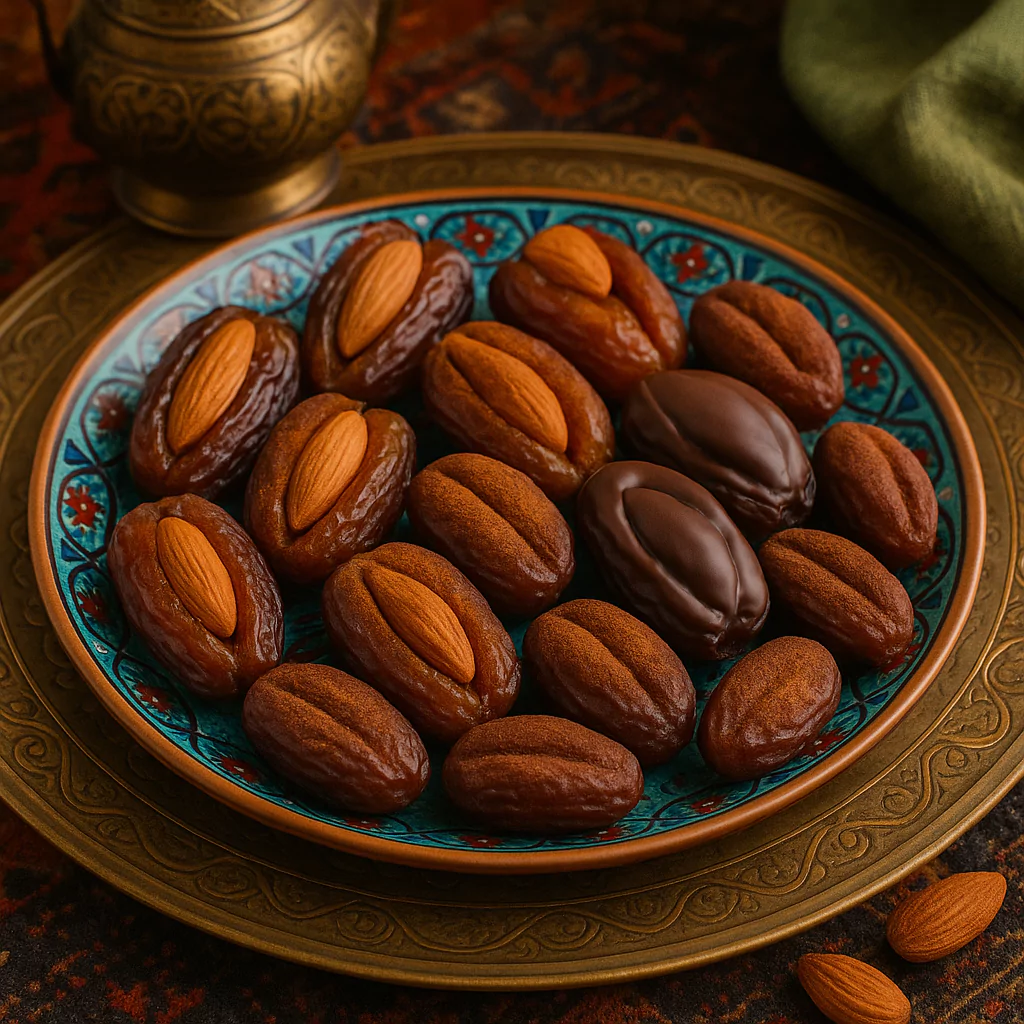
Key Takeaways — What You'll Learn on This Page
- Why almond + date is one of the most complete natural snack combinations
- Step-by-step recipe with photos — ready in under 5 minutes
- Full nutritional breakdown per serving with daily value percentages
- Whole almond vs almond butter stuffing — which to choose
- Creative variations including honey glazed, chocolate dipped & more
- How to serve almond stuffed dates for Ramadan and Eid occasions
- Why Almond Stuffed Dates Are Loved
- Health Benefits of the Date + Almond Combo
- Ingredients — What You Need
- Step-by-Step Recipe with Photos
- Nutritional Breakdown Per Serving
- Whole Almond vs Almond Butter — Which Wins?
- Creative Variations to Try
- Serving for Ramadan, Eid & Occasions
- Storage Tips & Shelf Life
- Ancient Tradition Behind This Pairing
- Frequently Asked Questions
There are very few snacks in the world that can genuinely claim to be both effortlessly simple and genuinely nutritious. Almond stuffed dates are one of them. Made with just two whole food ingredients — dates and almonds — this no-cook recipe has been enjoyed across the Middle East, North Africa, and South Asia for centuries, and it is now having a well-deserved global moment as the world rediscovers the power of traditional whole-food eating.
Unlike processed snack bars that promise health benefits through a long list of fortified additives, almond stuffed dates deliver nutrients in the most bioavailable form possible: straight from nature. The dates provide natural sugars, dietary fibre, iron, potassium, and a potent array of antioxidant compounds. The almonds contribute protein, vitamin E, healthy monounsaturated fats, magnesium, and calcium. Together, they create a snack that is nutritionally more complete than the sum of its parts — one that genuinely fuels your body, satisfies sweet cravings, and sustains energy without a crash.
In this complete guide, we walk you through the full recipe, the science behind its benefits, creative variations to keep things exciting, and the cultural significance of this beloved combination in Islamic and Middle Eastern food tradition.
Why Almond Stuffed Dates Are Loved Worldwide
From Ramadan iftars in Riyadh to health food cafés in London and New York, almond stuffed dates have crossed cultural boundaries to become a universally appreciated snack. Here is what makes them so enduringly popular.
Simple & Natural
Just two whole-food ingredients — no additives, no preservatives, no artificial anything. Clean eating at its most delicious and accessible. For those exploring the full world of stuffed dates, this is the foundation recipe everything else builds on.
Perfect Texture Contrast
The soft, yielding chewiness of a ripe date against the satisfying crunch of a whole almond is a textural combination that is genuinely hard to beat. It hits the same pleasure centre as many far less healthy processed snacks, without any of the downsides.
Genuinely Nutritious
Packed with dietary fibre, natural sugars, healthy monounsaturated fats, protein, iron, magnesium, and vitamin E — this snack provides a meaningful contribution to your daily nutritional needs, unlike most processed snack foods which deliver empty calories.
Kid-Friendly & School-Safe
Children enjoy almond stuffed dates as a natural alternative to candy. They satisfy a sweet tooth without refined sugar, and their compact size makes them perfect for lunchboxes. The natural sweetness of dates makes them one of the few health foods kids genuinely reach for without persuasion.
Perfect for Ramadan Fasting
The Prophet Muhammad (peace be upon him) recommended breaking the fast with dates, and combining them with almonds provides an ideal iftar opener — fast-releasing natural sugars to restore blood glucose quickly, followed by sustained energy from almond protein and healthy fats. Learn more about dates in Islamic tradition.
Pre & Post Workout Power
Eat 3–4 almond stuffed dates 30 minutes before exercise for a natural carbohydrate-protein energy boost, or consume them after training to replenish glycogen stores and support muscle recovery — all without artificial sports nutrition products or processed energy bars.
Health Benefits of the Almond + Date Combination
When dates and almonds are eaten together, something nutritionally interesting happens: their individual strengths complement each other in ways that make the combination more valuable than either food alone. The natural sugars in dates are naturally slowed by almond fat and protein, producing a more moderate glycaemic response. Meanwhile, the fat from almonds actually enhances the absorption of fat-soluble antioxidants present in dates. This is why nutritionists often recommend eating dates with nuts rather than on their own.
Why This Pairing Is a Nutritional Powerhouse
Heart Health Support
Almonds are one of the most studied foods for cardiovascular health — their monounsaturated fats and vitamin E may help reduce LDL cholesterol. Dates provide potassium, which research suggests helps regulate blood pressure by counteracting the effects of sodium. Together, they form a heart-supportive snack backed by substantial scientific evidence.
Sustained Energy Without Crashes
The natural sugars in dates — glucose, fructose, and sucrose — provide fast-acting energy, while almonds' protein (6g per 28g serving) and healthy fats slow absorption significantly. This creates a prolonged, stable energy release that avoids the blood sugar spike-and-crash cycle of processed sugary snacks. Ideal for sustained focus and physical performance.
Digestive Health & Gut Function
Dates are rich in dietary fibre — approximately 8g per 100g — including both soluble and insoluble types. Soluble fibre feeds beneficial gut bacteria (acting as a prebiotic), while insoluble fibre adds bulk to stool and supports healthy bowel regularity. Studies suggest that date consumption is associated with reduced markers of constipation and improved gut microbiome diversity.
Bone Strength & Mineral Density
Both almonds and dates are meaningful sources of bone-supporting minerals: calcium, magnesium, phosphorus, and boron. The magnesium in almonds is particularly important as it enhances the body's ability to absorb and deposit calcium into bone matrix. For women and older adults at risk of osteoporosis, regular consumption of these foods as part of a balanced diet may offer protective benefits.
Brain Function & Cognitive Support
Almonds contain riboflavin and L-carnitine, both of which support neurological function and have been studied in relation to reduced cognitive decline risk. Dates' antioxidant flavonoids — including quercetin and luteolin — may help protect brain cells from oxidative stress. The combination of these compounds in a single snack makes almond stuffed dates a smart choice for mental clarity and long-term cognitive health.
Powerful Antioxidant Protection
Dates — particularly Ajwa dates — contain exceptionally high levels of antioxidants including flavonoids, carotenoids, and phenolic acids. Almonds contribute vitamin E, one of the most effective fat-soluble antioxidants known. Together, they help neutralise free radicals that contribute to cellular ageing, inflammation, and chronic disease development. The health benefits of Ajwa dates specifically include some of the highest antioxidant activity recorded in any date variety.
💡 Nutritionist's Note
Studies suggest that eating almonds alongside carbohydrates significantly lowers the glycaemic response to those carbohydrates — in some trials by up to 30%. This makes the almond + date combination particularly beneficial for anyone managing blood sugar, including those with pre-diabetes or PCOS, where choosing lower-GI snack options matters most.
Ingredients for Almond Stuffed Dates
One of the greatest things about this recipe is its ingredient simplicity. You need exactly two things to make a batch of 12 almond stuffed dates — and everything else is purely optional enhancement. Quality matters here: choose plump, moist, fresh dates with shiny skin rather than dried or hardened ones, and opt for raw or lightly roasted almonds rather than heavily salted or flavoured varieties to preserve nutritional integrity.
If you want to elevate the flavour profile for gifting or special occasions, the optional additions below add beautiful complexity without compromising the health credentials of this snack. Each optional ingredient was chosen because it adds both flavour and an additional nutritional benefit — not just empty decoration.
💡 Choosing Your Dates
For the best stuffed dates, choose based on your priority: Medjool dates for large size and caramel softness; Ajwa dates for maximum antioxidant content and Islamic tradition; Sukkari dates for honeyed sweetness; or Safawi dates for a firmer, less sweet option. All work beautifully with almonds.
Core Ingredients (Makes 12)
- 12 fresh soft dates — Medjool, Ajwa, Sukkari, or Safawi; plump and moist
- 12–24 whole almonds — raw, or lightly roasted without oil or salt
Optional Enhancements
- Raw honey — a light drizzle for extra sweetness and antimicrobial benefits
- Ceylon cinnamon — a dusting for warmth and blood sugar regulation
- Flaky sea salt — a few flakes for a sweet-savoury contrast
- Unsweetened shredded coconut — roll dates in coconut for a tropical twist
- Sesame seeds — adds a nutty flavour and extra calcium
- Dark chocolate (70%+) — dip finished dates for a gourmet dessert version
- Edible rose petals — scatter over for Ramadan or Eid presentation
How to Make Almond Stuffed Dates — Step by Step
No cooking required. No equipment needed beyond a small knife. This is one of those rare recipes that is genuinely as simple as it looks — and the results are consistently impressive.
Method
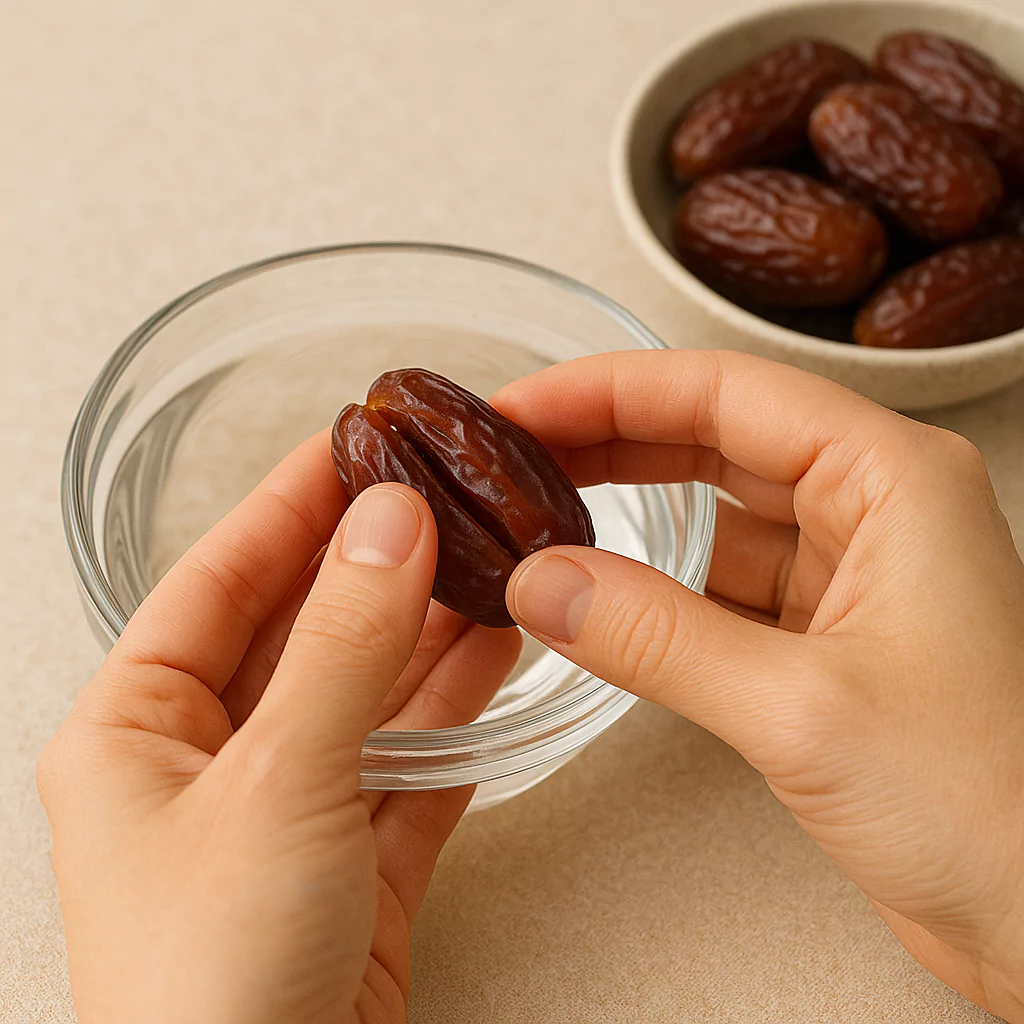
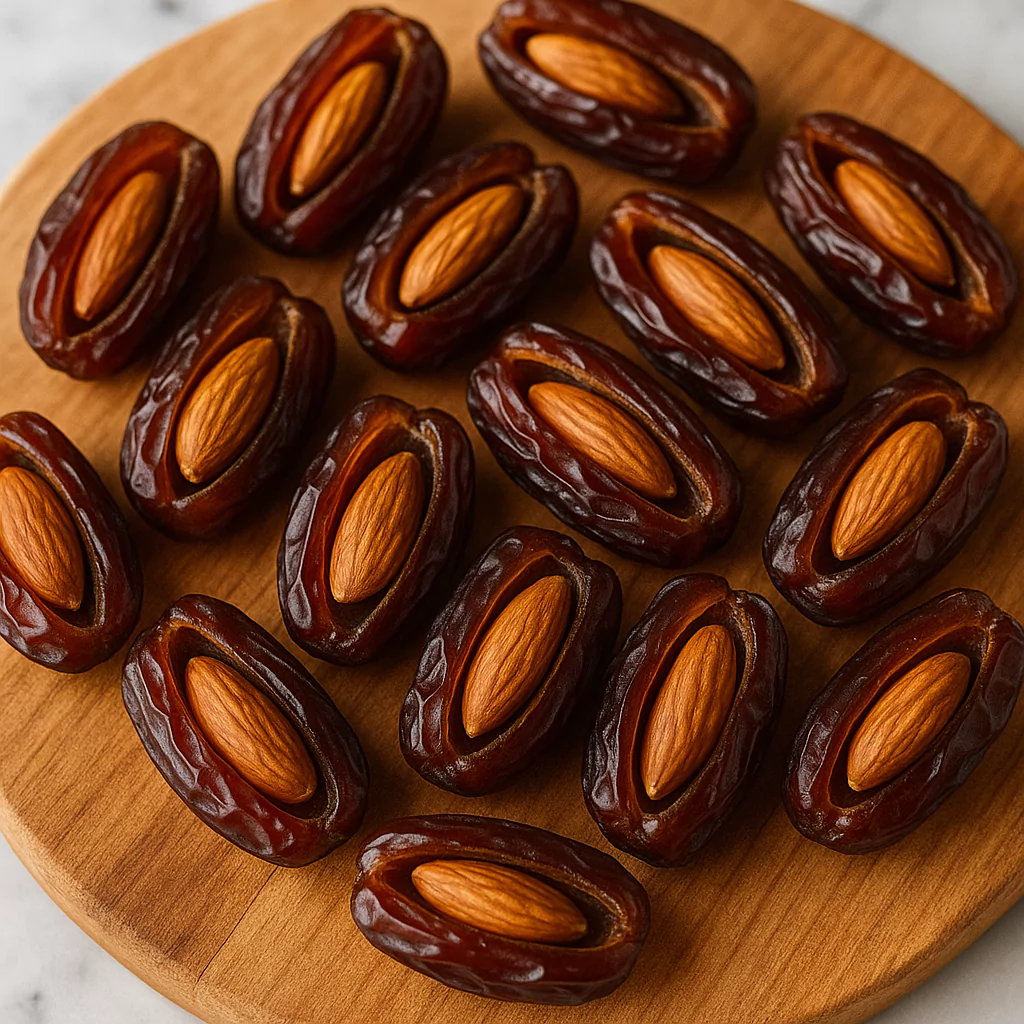
- Prepare your workspace Wash your hands thoroughly and lay your dates, almonds, and any optional ingredients out on a clean chopping board. If your dates have been refrigerated, let them sit at room temperature for 5–10 minutes first for the best texture.
- Make a lengthwise slit Using a small paring knife or butter knife, make a careful lengthwise cut along one side of each date. You want to open the date enough to remove the pit and insert an almond without splitting it in half completely — think of it like opening a book rather than tearing a page.
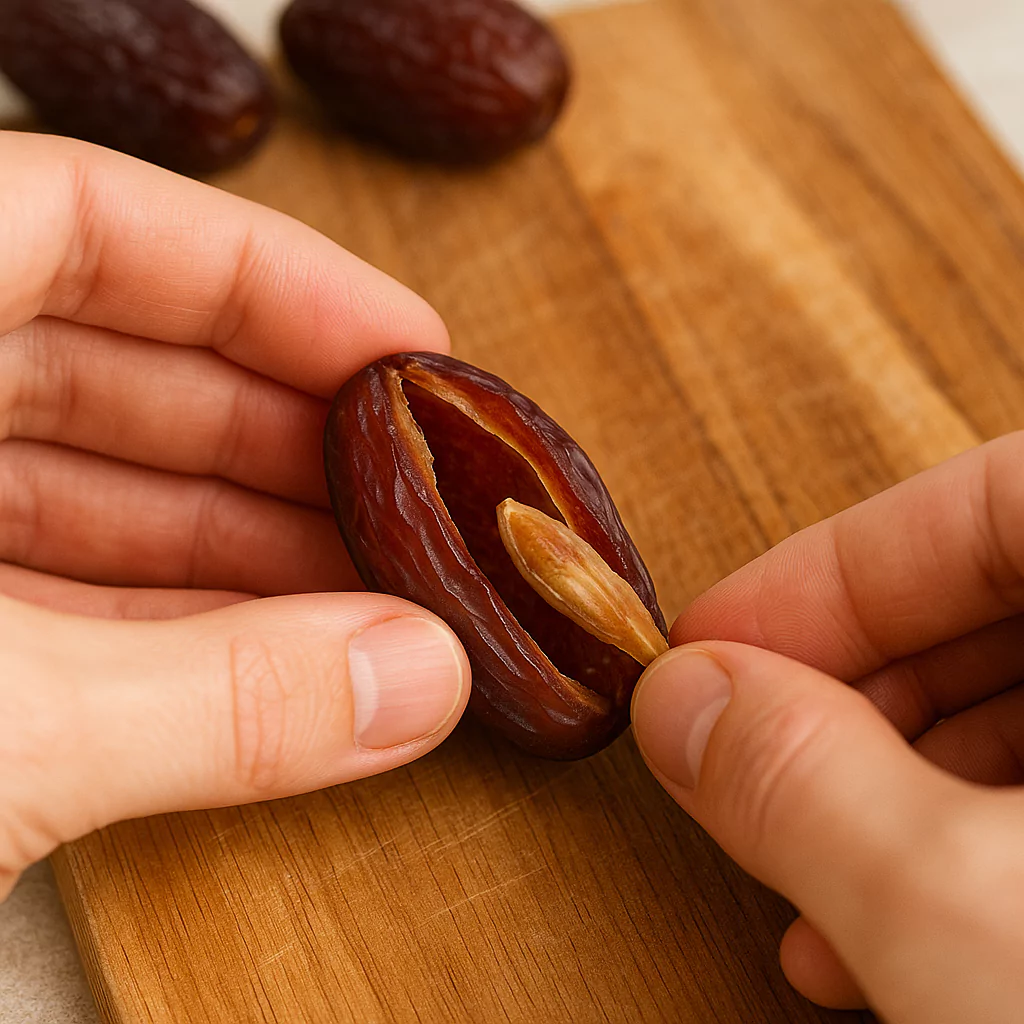
- Remove the pit Gently press the date open with your thumbs and remove the pit. It should come out cleanly in one piece. If using Medjool dates, the pit is large and easy to extract. Ajwa date pits are slightly smaller but equally easy to remove once the cut is made.
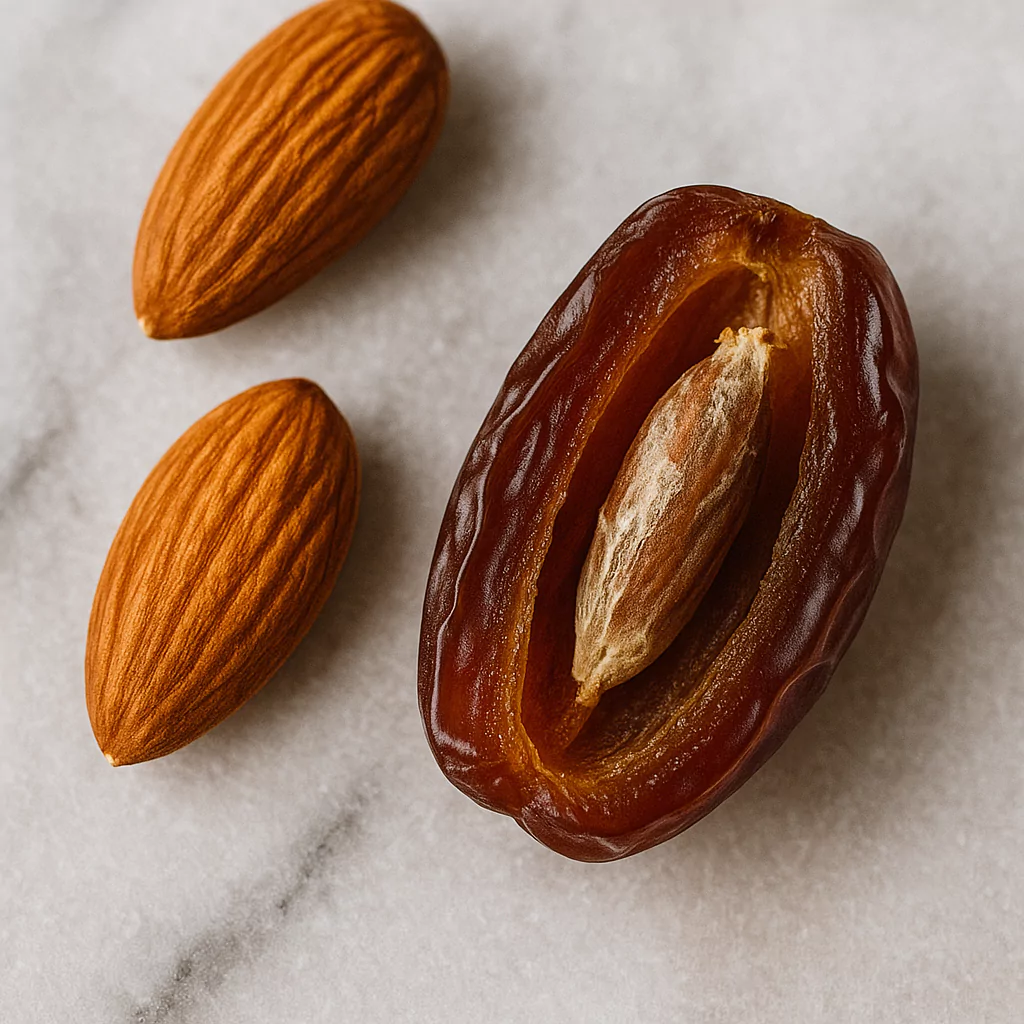
- Insert the almond Press 1–2 whole almonds firmly into the cavity where the pit sat. The date should close naturally around the almond, securing it in place. If using 2 almonds per date, arrange them in a V-shape for a more visually appealing result when the date is presented open-faced.
- Add optional toppings Now is the time for any enhancements. Drizzle with honey, dust with cinnamon, press in a flake of sea salt, roll in shredded coconut, or dip in melted dark chocolate. See our variations section below for detailed ideas on each method.
- Arrange and serve Place finished dates on a serving plate or in paper cases for an elegant presentation. Serve immediately at room temperature, or transfer to an airtight container for storage. That is genuinely all there is to it — no baking, no chilling required.
Nutritional Value Per Serving — 3 Almond Stuffed Dates
Values are approximate and vary depending on date variety, date size, and number of almonds per date. Based on standard Medjool dates with 1 whole almond each.
| Nutrient | Amount (3 dates) | % Daily Value | Primary Source | Key Benefit |
|---|---|---|---|---|
| Calories | 185–200 kcal | ~10% | Dates + Almonds | Sustained energy |
| Total Carbohydrates | 34–38g | ~13% | Dates | Fuel for brain & muscles |
| Dietary Fibre | 5–6g | ~20% | Dates | Digestion & satiety |
| Natural Sugars | 28–32g | — | Dates | Quick energy (moderated by fibre) |
| Protein | 3–4g | ~7% | Almonds | Muscle repair & satiety |
| Healthy Fats (MUFA) | 4–5g | ~7% | Almonds | Heart health, vitamin absorption |
| Potassium | 440–480mg | ~13% | Dates | Blood pressure regulation |
| Magnesium | 35–42mg | ~10% | Almonds + Dates | Nerve & muscle function |
| Vitamin E | 2.3–2.8mg | ~17% | Almonds | Antioxidant skin protection |
| Calcium | 38–46mg | ~4% | Almonds + Dates | Bone strength |
| Iron | 0.7–1.0mg | ~5% | Dates | Haemoglobin production |
| Flavonoid Antioxidants | Quercetin, luteolin, apigenin | — | Dates | Anti-inflammatory, anti-ageing |
📖 Using Ajwa Dates? If you use Ajwa dates instead of Medjool, the antioxidant content increases significantly — Ajwa dates contain some of the highest flavonoid concentrations of any date variety studied. The iron and magnesium content also tends to be slightly higher in Ajwa dates. For a full nutritional comparison, see our guide on Ajwa dates vs Medjool dates.
Whole Almond vs Almond Butter — Which to Choose?
One of the most common questions about almond stuffed dates is whether to use whole almonds or almond butter as the filling. Both options have distinct advantages in terms of texture, nutritional profile, ease of preparation, and suitability for different audiences. The table below compares both methods across the factors that matter most.
| Factor | Whole Almond | Almond Butter |
|---|---|---|
| Texture | ✔ Crunchy, satisfying bite | ◑ Creamy, softer — no crunch |
| Prep Ease | ✔ Fastest — just insert and done | ◑ Slightly messier to fill neatly |
| Best For | Adults, workout snacks, gifts | Young children, elderly, babies |
| Protein Content | ◑ Moderate (~1g per almond) | ✔ Higher per volume (~3–4g per tbsp) |
| Fat Content | ◑ Moderate healthy fats | ✔ Richer in healthy fats |
| Glycaemic Slowing Effect | ◑ Good | ✔ Excellent — more fat slows absorption further |
| Visual Appeal (Gifting) | ✔ Clean, elegant, traditional look | ◑ Can look less polished without piping |
| Allergen Concern | Whole almonds — choking risk for toddlers | ✔ Safer for young children |
| Flavour Profile | Neutral almond flavour, mild | Richer, more intense almond flavour |
💡 Our Recommendation
For everyday snacking, gifting, and adult use — go with whole almonds for their visual appeal, textural contrast, and ease of preparation. For households with young children, picky eaters, or anyone who prefers a smoother bite, almond butter is the better choice. You can also create mixed batches with half whole almond and half almond butter for variety. If using almond butter, pipe it in using a small spoon or a piping bag fitted with a round tip for a cleaner, more professional presentation.
Delicious Almond Stuffed Date Variations to Try
Once you have mastered the basic recipe, a world of delicious variations opens up. Each one takes just a minute or two of extra effort and transforms the snack into something new and exciting.
Honey & Sea Salt Glazed
Drizzle high-quality raw honey over freshly stuffed almond dates and finish with a single flake of sea salt per piece. The sweet-savoury-crunchy combination is genuinely addictive and makes a stunning addition to a charcuterie board or cheese platter. Raw honey adds its own antimicrobial and antioxidant benefits to an already nutritious snack.
Cinnamon Spiced
Dust freshly made almond stuffed dates with a generous pinch of Ceylon cinnamon (not cassia — Ceylon is the genuine article with lower coumarin content). Cinnamon adds warmth and a beautiful aroma while also offering documented blood sugar regulation benefits — making this variation particularly suitable for those managing PCOS or insulin sensitivity alongside a weight management plan.
Coconut Crusted
After stuffing, roll each date firmly in finely shredded unsweetened coconut. The coconut adheres naturally to the slightly sticky exterior of the date without any additional binder needed. The result looks spectacular on a dessert plate and adds extra dietary fibre and medium-chain triglycerides (MCTs) from the coconut — a healthy fat source with its own documented benefits.
Dark Chocolate Dipped
Melt 70%+ dark chocolate and dip the bottom half of each stuffed date, then place on parchment paper to set. Optionally, drizzle more chocolate over the top in a zigzag pattern for a professional finish. This transforms almond stuffed dates into an indulgent-feeling dessert that still carries the full nutritional benefits of the base recipe. Perfect for chocolate stuffed dates lovers.
Ramadan Rosewater & Pistachio
Brush each almond stuffed date lightly with rosewater and press a single chopped pistachio on top. The combination of rosewater's floral fragrance with date sweetness and pistachio's vibrant green colour creates a visually stunning Ramadan presentation piece. Arrange on a silver or gold tray lined with parchment for an authentic Middle Eastern iftar centrepiece.
Almond Butter & Tahini Filled
Mix equal parts almond butter and tahini (sesame paste) to create a rich, nutty, slightly bitter filling that contrasts beautifully with the date's natural sweetness. Pipe into pitted dates using a small spoon or piping bag. This variation significantly increases the calcium, zinc, and healthy fat content of the snack, and is particularly popular in Lebanese and Palestinian food culture.
Almond Stuffed Dates for Ramadan, Eid & Special Occasions
In Islamic tradition, the act of breaking the fast during Ramadan with dates is not merely cultural preference — it is a Sunnah (practice of the Prophet Muhammad, peace be upon him) with documented nutritional wisdom behind it. Dates rapidly restore blood glucose levels after a day of fasting, preventing the lightheadedness and energy crash that can accompany breaking a long fast with heavy foods. Adding almonds to iftar dates takes this traditional wisdom a step further — the protein and healthy fats in almonds slow subsequent digestion, helping fasters avoid overeating at iftar by promoting earlier satiety.
Beyond Ramadan, almond stuffed dates are a cornerstone of Eid celebrations across the Muslim world. Beautifully presented in decorative boxes, they are one of the most beloved Eid gifts — meaningful, delicious, and rooted in centuries of tradition. In Saudi Arabia, the UAE, and across North Africa, no Eid gathering is complete without a plate of dates prominently displayed for guests.
Learn more about the deep spiritual and cultural significance of dates in our dedicated article on Ajwa dates in Islam, which explores the Prophetic narrations and historical context in detail. For inspired traditional recipe ideas to expand your Ramadan and Eid spread, our guide to traditional Saudi date desserts has everything you need.
Perfect Occasions for Almond Stuffed Dates
Ramadan Iftar
Break the fast the traditional wayEid Al-Fitr & Al-Adha
Serve to guests or give as giftsWeddings & Engagement Parties
A traditional symbol of sweetnessPre or Post Workout
Natural energy without supplementsHomemade Gifts
Box them beautifully for loved onesKids' Lunchboxes
Healthy alternative to candyTraditional Islamic Nutrition Wisdom
1,400+ years of health-focused food culture
In Islamic tradition, dates and almonds each hold profound significance. The Prophet Muhammad (peace be upon him) described Ajwa dates specifically as a protection and a cure, and historical accounts describe him breaking his fast with dates and water before prayer. Ancient Arabian physicians like Ibn Sina (Avicenna) — whose Canon of Medicine remained a definitive medical text for centuries — documented dates as providing the ideal combination of quick and sustained energy, calling the combination of dates with nuts "complete nutrition for the travelling mind and body."
For over 7,000 years, dates have been cultivated across the Arabian Peninsula and the broader Middle East. Archaeological evidence from Mesopotamia places date cultivation as early as 5000 BCE. Almonds, native to the same geographic region, have been consumed alongside dates for at least 4,000 years. The pairing is not accidental — it reflects generations of intuitive nutritional wisdom that modern science is now confirming through clinical research.
In Bedouin culture, dates stuffed with nuts were traditionally given as wedding gifts, symbolising sweetness, abundance, and the wish for a prosperous future. This custom persists across many communities today, connecting modern families to one of humanity's oldest and most delicious food traditions. Whether you eat almond stuffed dates as a health snack, a spiritual practice, or a cultural celebration, you are participating in something far older and richer than any modern wellness trend.
Storage Tips & Shelf Life
One of the practical advantages of almond stuffed dates is their excellent shelf life. Make a large batch and enjoy them across the week without any loss of quality.
Room Temperature
1 Week in an airtight containerKeep away from direct sunlight and heat. Ideal in cool, dry conditions under 22°C.
Refrigerator
3 Weeks in an airtight containerLayer with parchment paper to prevent sticking. Rest at room temperature 5 min before serving.
Freezer
3 Months individually wrappedFreeze individually on a tray first, then transfer to a bag. Thaw at room temperature for 15 minutes.
💡 Gifting Storage Tip
If making almond stuffed dates as gifts, arrange them in paper petit four cases inside a decorative box lined with parchment paper. This keeps them from touching each other and sliding around during transport. Add a small card noting storage instructions for the recipient — and if you have added honey or chocolate coatings, always recommend refrigeration. Dates presented this way stay fresh for 5–7 days at room temperature and make a beautiful, professional-looking homemade gift.
Frequently Asked Questions
Everything you need to know about making, eating, storing, and gifting almond stuffed dates — answered clearly.
Can I use roasted almonds instead of raw?
Yes — roasted almonds work beautifully and add a deeper, more complex toasted flavour that many people prefer. Lightly roasting almonds at home (10–12 minutes at 175°C / 350°F without oil) gives the best results while preserving most of their nutritional value. Avoid heavily salted or flavoured commercial roasted almonds, which can overwhelm the natural sweetness of the date. Raw almonds preserve the maximum amount of vitamin E and healthy fats, while also having a milder, cleaner flavour that lets the date's natural sweetness take centre stage.
Are almond stuffed dates good for weight loss?
In moderation, yes — and the research supports this. The combination of dietary fibre from dates and protein plus healthy fats from almonds is one of the most effective natural combinations for promoting satiety and reducing overall calorie intake. Studies on nut consumption consistently show that people who eat nuts regularly (including almonds) tend to maintain healthier body weights than those who avoid them, partly because the protein and fat increase feelings of fullness. The key is portion control: 3–5 almond stuffed dates per day is a health-supportive amount. Eating ten or more in a sitting would provide a significant calorie load that could work against weight goals. For more on this topic, see our dedicated guide on Ajwa dates and weight loss.
What is the best type of date to use for almond stuffed dates?
The "best" date depends on what you are prioritising. Medjool dates are the most popular choice globally due to their large size, soft caramel-like flesh, and easy pit removal — they are the most forgiving for beginners and produce the most visually striking results. Ajwa dates from Madinah are the most medicinally valued variety, with the highest documented antioxidant content of any common date — the ideal choice for those specifically seeking health benefits. Sukkari dates offer an extremely sweet, honeyed flavour profile that pairs well with the more neutral almond. Safawi dates are firmer and less sweet, giving a more balanced, less sugary result. All of these varieties are available through our types of dates guide which covers each variety in depth.
How many almond stuffed dates should I eat per day?
For most healthy adults, 3–5 almond stuffed dates daily is a well-balanced portion that provides meaningful nutritional benefits without excessive sugar or calorie intake. This equates to roughly 185–330 calories depending on date size and number of almonds used. For those managing blood sugar (including pre-diabetics or those with PCOS), staying at the lower end of 2–3 dates per day and pairing them with a small amount of additional protein is advisable. Athletes and very active individuals can consume up to 6–8 as a pre or post workout snack. Children aged 5 and above can safely enjoy 2–3 per day as a healthy snack alternative to processed sweets. See our full guide on how many dates to eat daily for more detailed guidance by health goal and life stage.
Are almond stuffed dates suitable for diabetics?
Dates have a low to moderate glycaemic index — typically between 44 and 53 depending on the variety — which is significantly lower than most processed sweet snacks. When combined with almonds, the protein and monounsaturated fats slow gastric emptying and glucose absorption considerably, further reducing the glycaemic impact of the same amount of date sugar. Some clinical studies have shown that consuming dates alongside fat and protein produces a meaningful reduction in post-meal blood glucose compared to consuming dates alone. However, individual responses to carbohydrates vary significantly, and diabetics (Type 1 or Type 2) should always monitor their blood glucose after trying a new food and consult their healthcare provider or registered dietitian before incorporating almond stuffed dates regularly into their diet.
Can pregnant women eat almond stuffed dates?
Yes — almond stuffed dates are considered an excellent food during pregnancy, particularly in the third trimester. Research published in the Journal of Obstetrics and Gynaecology found that women who consumed dates daily in the final four weeks of pregnancy had significantly higher rates of spontaneous labour, greater cervical dilation on admission, and shorter early-stage labour compared to those who did not eat dates. The nutritional combination of dates and almonds provides folate (critical for fetal neural tube development), iron (supporting the dramatically increased blood volume of pregnancy), calcium and magnesium (for fetal bone development), and healthy fats (for fetal brain development). For detailed guidance on dates during pregnancy, visit our dedicated page on Ajwa dates for pregnancy and fertility. Always discuss any significant dietary changes with your midwife or obstetrician.
Can I use almond butter instead of whole almonds?
Absolutely — almond butter is an excellent alternative that creates a creamier, smoother filling. This is particularly recommended for young children (for whom whole almonds pose a choking risk), elderly individuals who prefer softer textures, and anyone who simply prefers the texture of nut butter to whole nuts. Use a small teaspoon or piping bag to fill the date cavity with approximately half a teaspoon of almond butter per date. For extra flavour, stir a pinch of cinnamon, a drop of vanilla extract, or a tiny amount of raw honey into the almond butter before filling. Natural, additive-free almond butter (just almonds, nothing else) is the best choice nutritionally. The glycaemic-slowing effect is actually slightly more pronounced with almond butter than whole almonds, because the fat is more evenly distributed throughout the filling.
Are almond stuffed dates good for Ramadan iftar?
Almond stuffed dates are arguably the ideal iftar opener. The Prophetic practice of breaking the fast with dates is nutritionally well-founded: after a day without food or water, the body needs fast-acting glucose to restore blood sugar quickly, and dates provide this in a natural, easily digestible form. Adding almonds to iftar dates takes this one step further — the protein and healthy fats in almonds moderate the speed of sugar absorption, preventing the blood sugar spike that can lead to overeating at iftar when the initial hunger is relieved. By stabilising blood sugar more effectively, almond stuffed dates help fasters feel satisfied with less food, reducing the tendency to overconsume at the main iftar meal. They also provide potassium (for hydration and electrolyte balance after a day of no fluids), magnesium (for muscle relaxation and sleep), and sustained energy that helps get through the Tarawih prayers that follow iftar. Learn more about the Islamic tradition and significance at our dedicated page on Ajwa dates in Islam.
How long do almond stuffed dates keep, and how should I store them?
Almond stuffed dates have an excellent shelf life compared to most homemade snacks. At room temperature in an airtight container kept away from heat and direct sunlight, they stay fresh for up to 1 week. In the refrigerator in an airtight container, they keep well for up to 3 weeks — layer between sheets of parchment paper to prevent sticking. For longer storage, freeze individually on a lined baking tray and then transfer to a zip-lock freezer bag — they will keep for up to 3 months. To thaw, simply leave at room temperature for 15–20 minutes. If you have added honey, chocolate, or coconut toppings, refrigeration is always recommended regardless of how soon you plan to consume them. Always allow refrigerated dates to rest at room temperature for a few minutes before eating — they taste significantly better at room temperature than straight from the fridge.
Can I make almond stuffed dates as gifts?
Almond stuffed dates make genuinely beautiful homemade gifts — arguably among the most thoughtful food gifts you can make, because they combine cultural tradition, nutritional value, visual elegance, and personal effort in a way that very few other homemade foods can match. For gifting, arrange completed dates in individual paper petit four cases inside a decorative box or tin lined with tissue paper. Include a small handwritten card with storage instructions. For Eid gifts, add a ribbon in gold or green. For wedding favours, small glass jars with 4–6 dates make elegant table gifts. For corporate gifting, a large lacquered wooden box filled with an assortment of plain, honey-glazed, and chocolate-dipped almond stuffed dates creates a premium, memorable gift that is far more distinctive than the typical biscuit tin. The shelf life of up to 3 weeks refrigerated means you can make large batches well in advance for events.
⚕️ Health Disclaimer: This content is for informational and educational purposes only and does not constitute medical advice, diagnosis, or treatment. All health benefits described are based on available nutritional research and are expressed as potential benefits using language such as "may help" or "studies suggest." Nutritional values are approximate estimates and may vary. Individuals with diabetes, nut allergies, or specific medical conditions should consult a qualified healthcare professional before making dietary changes. Do not use this information as a substitute for professional medical advice.
Sources & References
- Al-Shahib, W., & Marshall, R.J. (2003). The fruit of the date palm: its possible use as the best food for the future. International Journal of Food Sciences and Nutrition. PubMed: 12850886
- Sathe, S.K. et al. Nutritional composition of almonds and their role in human health. Comprehensive Reviews in Food Science and Food Safety. PMC3257681
- Tan, S.Y. & Mattes, R.D. (2013). Appetitive, dietary and health effects of almonds consumed with meals or as snacks. European Journal of Clinical Nutrition. PubMed: 24084509
- Kordi, M. et al. (2017). Effect of Dates in Late Pregnancy on the Duration of Labor. Iranian Journal of Nursing and Midwifery Research. PMC5637148
- Healthline Editorial. 9 Evidence-Based Health Benefits of Almonds. Reviewed by Kris Gunnars, BSc. Healthline.com