Ajwa Dates vs Kalmi Dates: Key Differences Explained
Ajwa and Kalmi dates are two of the most searched-for varieties among date buyers, and the confusion between them is understandable — both are dark-toned, widely available, and commonly found side by side in South Asian and Middle Eastern markets. But beneath the surface, they come from entirely different growing regions, cultivars, and traditions.
This guide breaks down exactly how Ajwa dates vs Kalmi dates compare across origin, taste, texture, nutrition, religious significance, and price, so you can confidently choose the right variety for your needs.
Key Takeaways
- Ajwa dates are grown exclusively in Madinah, Saudi Arabia; Kalmi dates are grown mainly in Sindh, Pakistan.
- Ajwa dates are soft, dark, and rich in flavor; Kalmi dates are firmer, lighter, and more subtly sweet.
- Ajwa dates carry specific religious significance referenced in Hadith; Kalmi dates do not.
- Ajwa dates are a premium-priced variety, while Kalmi dates are widely affordable and used daily.
- Both share a broadly similar core nutrition profile, though Ajwa’s antioxidant content has been more extensively studied.
Ajwa vs Kalmi Dates: Quick Overview
Ajwa dates are a premium date variety grown in the region around Madinah, Saudi Arabia, and are widely recognized for their soft texture, deep flavor, and significance in Islamic tradition. Kalmi dates, by contrast, are a firmer, semi-dry variety grown extensively in Pakistan, valued for their affordability and everyday versatility rather than any particular ceremonial role.
While both are frequently found in the same date aisles and occasionally mistaken for one another due to their brownish tones, they come from entirely different date palm cultivars, growing climates, and market positioning.
Origin & Growing Regions
Ajwa dates are grown almost exclusively in and around Madinah, in Saudi Arabia’s western region, an area with unique soil and climate conditions that have supported date cultivation for centuries. This limited growing region is a major reason Ajwa dates command a premium price and are considered a specialty product.
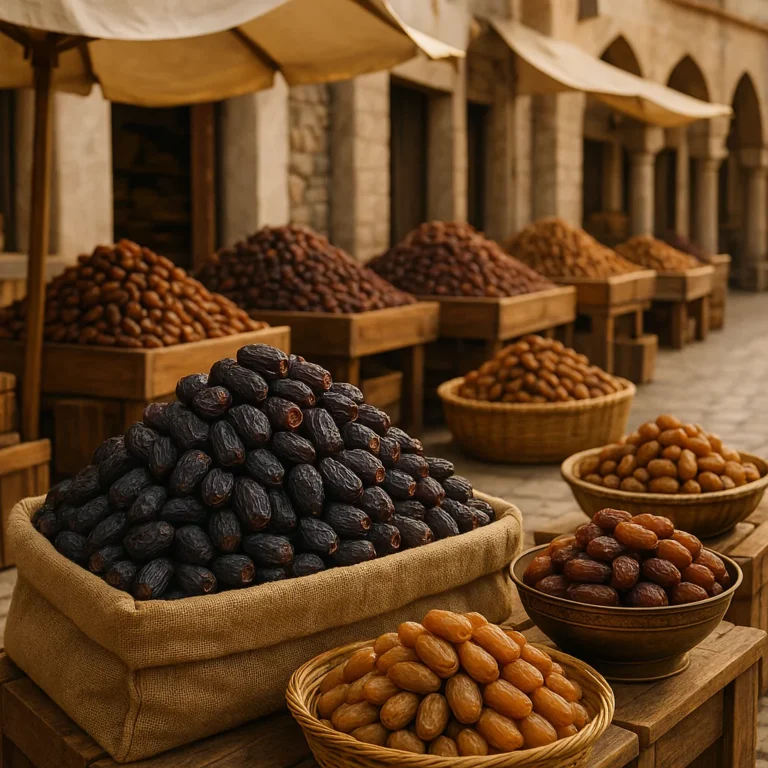
Kalmi dates, on the other hand, are cultivated extensively in the Khairpur and Sindh regions of Pakistan, one of the largest date-producing areas in South Asia. The broader growing area and higher production volume make Kalmi dates significantly more accessible and affordable.
Taste, Texture & Appearance
| Feature | Ajwa Dates | Kalmi Dates |
|---|---|---|
| Texture | Soft, wrinkled, moist | Firm, semi-dry, chewy |
| Flavor | Rich, slightly smoky caramel | Mild caramel, earthy |
| Color | Dark brown to near-black | Amber to medium brown |
| Shape | Small, rounded | Elongated, slightly wrinkled |
| Moisture Level | High | Moderate to low |
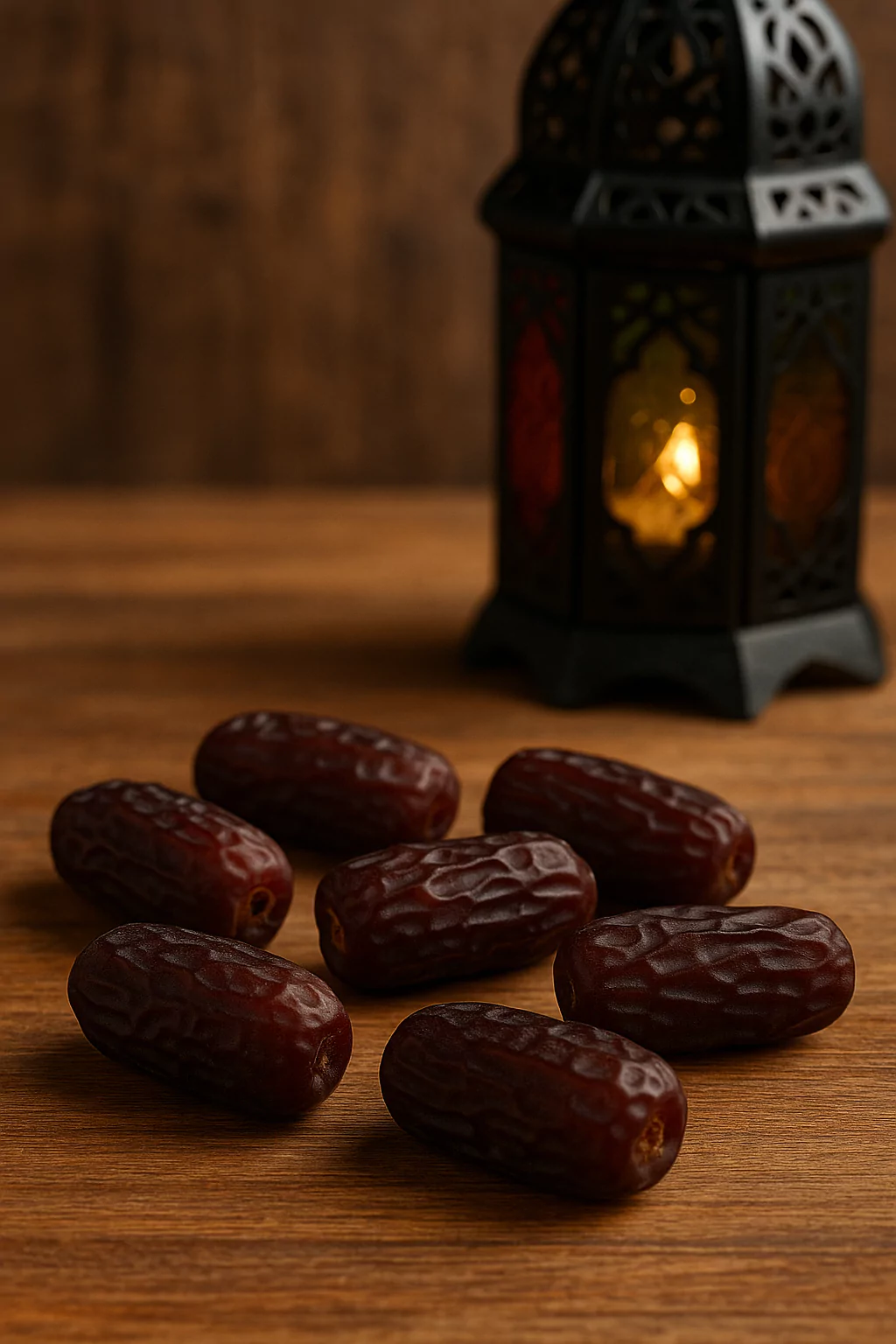
The texture difference is often the fastest way to tell them apart: Ajwa dates yield easily when pressed, while Kalmi dates hold their shape and require more chewing.
Nutrition Comparison
| Nutrient (per 100g) | Ajwa Dates | Kalmi Dates |
|---|---|---|
| Calories | ~280–300 kcal | ~275–290 kcal |
| Dietary Fiber | ~6–8 g | ~6–7 g |
| Natural Sugars | ~63–66 g | ~62–65 g |
| Potassium | ~660–700 mg | ~650–690 mg |
| Iron | ~1.0–1.2 mg | ~0.9–1.1 mg |
| Antioxidant Research | Extensively studied | Limited published research |
Nutritionally, the two varieties are quite close. For a deeper look at Ajwa’s studied benefits, see our full health benefits of Ajwa dates page. For Kalmi’s full nutrition breakdown, visit our Kalmi dates guide.
Quick Reference: Ajwa vs Kalmi at a Glance
Ajwa: Soft, premium, religious significance, higher price | Kalmi: Firm, everyday, affordable, versatile in cooking
Health Benefits Comparison
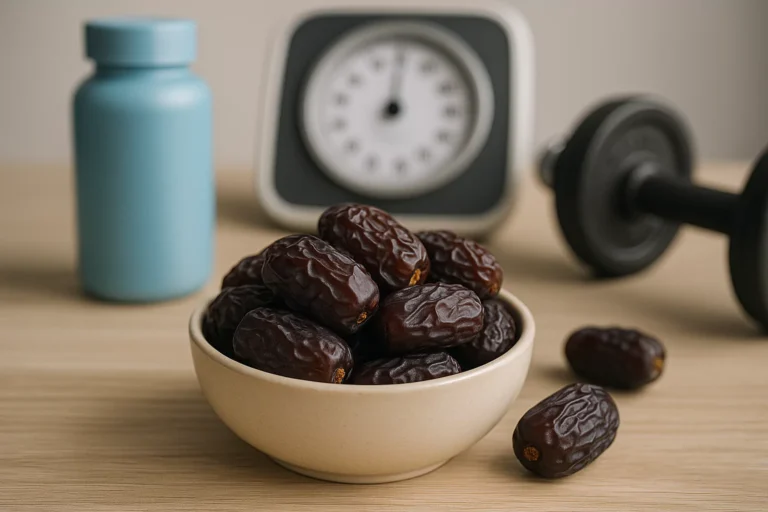
Both varieties may offer similar general benefits associated with dates as a food category — supporting digestion through fiber, providing sustained natural energy, and contributing potassium and iron to the diet. Ajwa dates have been the subject of more targeted research into their polyphenol and antioxidant content specifically, which is part of why they’re often marketed with a stronger wellness positioning. Kalmi dates, while less studied in isolation, share the same core nutritional foundation common to most date varieties.
Religious & Cultural Significance
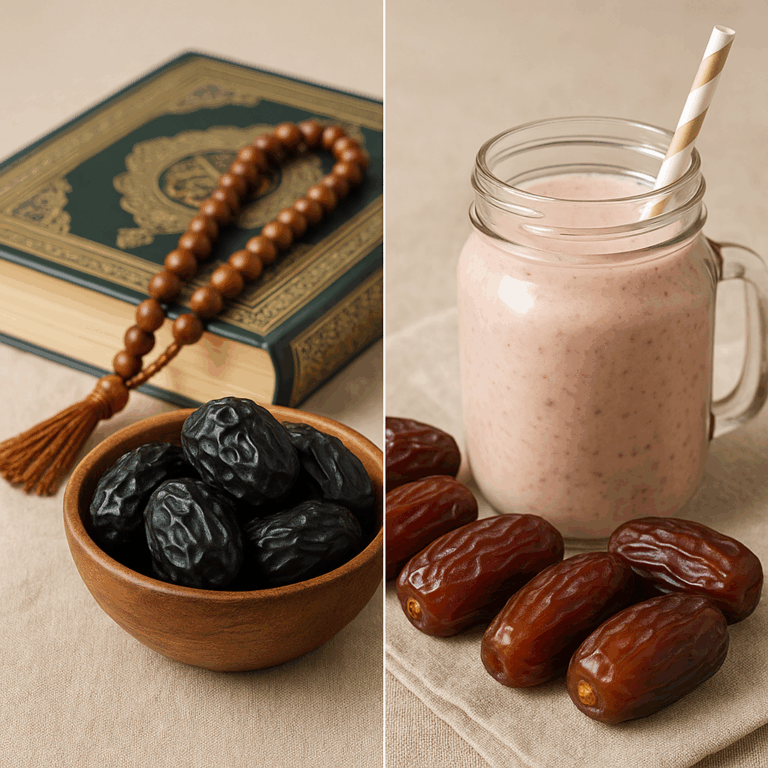
Ajwa dates hold a distinct place in Islamic tradition, referenced specifically in Hadith and often associated with the region of Madinah itself. This religious and cultural weight is a major factor in their popularity and pricing, independent of their nutritional content. Kalmi dates do not carry the same specific religious association, though dates broadly are referenced throughout Islamic teaching — you can explore this wider context in our guide to dates in Islam.
Price Comparison
Ajwa dates are consistently priced at a premium compared to Kalmi dates, driven by their limited growing region, labor-intensive cultivation, and strong demand tied to religious significance. Kalmi dates, grown at much larger scale across Pakistan, are considerably more budget-friendly, making them a practical everyday choice for households that want the general benefits of dates without the cost of a specialty variety. For current Ajwa pricing details, see our Ajwa dates price 2025 guide.
Which Should You Choose?
If you’re buying dates for religious observance, gifting, Ramadan, or simply want the richest, softest date experience, Ajwa dates are typically the preferred choice despite the higher price. If you’re looking for an affordable, versatile date for daily snacking or cooking, Kalmi dates are a practical and satisfying option. Many households keep both on hand for different purposes.
Can You Substitute One for the Other?
In most recipes — including stuffed dates, homemade date paste, and general baking — Kalmi dates can substitute for Ajwa dates reasonably well, though the flavor will be milder and the texture noticeably firmer. For recipes where the soft, rich texture of Ajwa dates is central to the result, such as chocolate stuffed dates, Ajwa or a similarly soft variety like Kimia is generally preferred.
Frequently Asked Questions
What is the main difference between Ajwa and Kalmi dates?
The main difference is origin and texture. Ajwa dates are grown only in Madinah, Saudi Arabia, and are soft, dark, and religiously significant, while Kalmi dates are grown mainly in Pakistan and are firmer, lighter in color, and more affordable.
Which is better, Ajwa or Kalmi dates?
Neither is objectively better; it depends on your purpose. Ajwa dates are prized for religious significance and a soft, rich texture, while Kalmi dates are valued for affordability and everyday versatility in cooking.
Are Kalmi dates as healthy as Ajwa dates?
Both varieties offer fiber, potassium, and natural antioxidants. Ajwa dates have been more extensively studied for antioxidant content specifically, but Kalmi dates share a broadly similar core nutritional profile.
Why are Ajwa dates more expensive than Kalmi dates?
Ajwa dates are grown in a much smaller geographic area around Madinah, require more labor-intensive cultivation, and carry religious significance, all of which contribute to a higher price compared to the more widely grown Kalmi variety.
Can I substitute Kalmi dates for Ajwa dates in recipes?
Yes, Kalmi dates can generally substitute for Ajwa dates in most recipes such as stuffed dates or date paste, though the flavor will be milder and the texture firmer.
Do Ajwa and Kalmi dates taste the same?
No. Ajwa dates have a rich, slightly smoky, caramel-like sweetness with a soft texture, while Kalmi dates are milder and more earthy in flavor, with a noticeably firmer, chewier bite.
Is Kalmi dates the same as Arabian dates?
No. Kalmi dates are primarily grown in Pakistan, whereas Arabian dates typically refers to varieties grown across Saudi Arabia and the Gulf, such as Ajwa, Sukkari, and Khudri dates.
Do Ajwa dates have more religious significance than Kalmi dates?
Yes, Ajwa dates are specifically referenced in Hadith and hold notable religious significance in Islamic tradition, while Kalmi dates do not carry the same specific religious associations.
Which date has a longer shelf life, Ajwa or Kalmi?
Kalmi dates, being firmer and slightly drier, often have a marginally longer shelf life at room temperature compared to the softer, moister Ajwa dates, though both keep well when stored properly.
Are Ajwa and Kalmi dates grown in the same region?
No. Ajwa dates are grown almost exclusively around Madinah, Saudi Arabia, while Kalmi dates are primarily cultivated in the Sindh region of Pakistan.
Sources & References
- National Center for Biotechnology Information (NCBI) — Nutritional composition of date fruit varieties
- Healthline — Dates: Nutrition, Benefits, and How to Eat Them
- WebMD — Health Benefits of Dates
- Nutrition Journal — Comparative antioxidant research in date varieties
- USDA FoodData Central — Dried fruit nutritional reference data

John A. Kareem is a natural wellness writer and researcher passionate about Ajwa dates and traditional Arabian foods.
At Ajwa Dates, he shares evidence-based, easy-to-read content that helps readers discover the real health benefits of dates and other natural ingredients.
His goal is to promote healthy living through authentic, time-tested knowledge.