
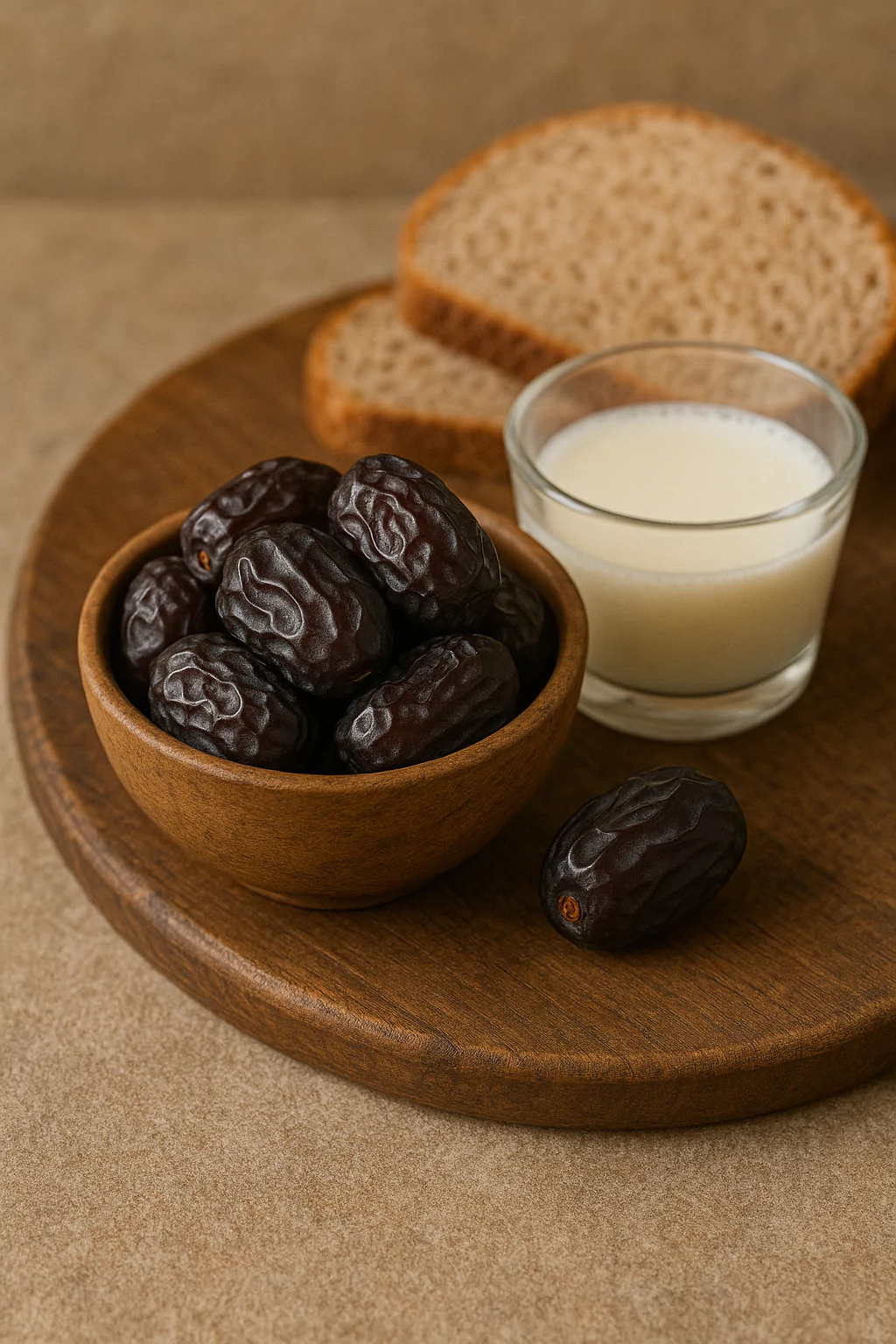
Dates with Milk Benefits: Night vs Morning, Soaked & Hot
Dates and milk are one of the oldest food pairings in Middle Eastern and South Asian households, valued for being simple, nourishing, and easy to prepare. Whether soaked overnight in cold milk, blended into a warm nighttime drink, or eaten side by side on an empty stomach, this combination brings together the fiber and minerals of dates with the protein and calcium of milk.
In this guide, we cover the full range of benefits associated with dates and milk, compare morning versus night consumption, soaked versus hot preparation, and explain where this pairing fits into Islamic tradition — so you can decide how best to include it in your own routine.
Key Takeaways
- Dates with milk combine fiber, natural sugars, and minerals from dates with protein and calcium from milk.
- Soaking dates in milk overnight may soften them and make them easier to digest.
- Morning and night consumption each have different appeal — energy support versus a calming pre-sleep ritual.
- The pairing holds a place in traditional and Islamic dietary practice as a wholesome, energy-dense combination.
- Diabetics and those managing calorie intake should watch portion size, since both dates and milk contribute meaningfully to daily carbohydrate and calorie totals.
Why Combine Dates and Milk?
Dates and milk complement each other nutritionally. Dates supply fiber, potassium, iron, and natural sugars for energy, while milk contributes protein, calcium, and vitamin D for bone and muscle support. Together, the fat and protein in milk may help slow the absorption of the natural sugars in dates, offering a more balanced release of energy compared to eating dates alone.
This pairing is especially common with softer date varieties such as Ajwa dates, which blend and soften easily in milk. If you’re specifically interested in the cold-milk-and-Ajwa tradition, our dedicated page on soaked Ajwa dates in cold milk on an empty stomach goes deeper into that specific practice.
Nutrition Snapshot: Dates + Milk Together
The table below shows an approximate combined nutritional profile for a typical serving of 3 dates with 1 cup (240ml) of whole milk.
| Nutrient | 3 Dates | 1 Cup Whole Milk | Combined |
|---|---|---|---|
| Calories | ~66 kcal | ~150 kcal | ~216 kcal |
| Protein | ~0.5 g | ~8 g | ~8.5 g |
| Carbohydrates | ~18 g | ~12 g | ~30 g |
| Fiber | ~1.6 g | 0 g | ~1.6 g |
| Calcium | ~10 mg | ~276 mg | ~286 mg |
Values are approximate and will vary based on date variety, size, and milk type used.
Top Benefits of Dates with Milk
1. Sustained Natural Energy
The natural sugars in dates combined with the protein and fat in milk may provide a more gradual, sustained energy release than sugar alone.
2. Bone and Muscle Support
Milk’s calcium and protein, paired with the magnesium and potassium in dates, may contribute to bone strength and muscle function over time.
3. Digestive Support
The fiber in dates, combined with milk’s smooth consistency, may support healthy digestion for some individuals, particularly when dates are softened by soaking.
4. A Calming Nighttime Ritual
Warm milk with dates is a traditional evening drink in many households, often associated with a sense of comfort and relaxation before bed.
5. Convenient, Whole-Food Nutrition
As a simple, minimally processed combination, dates with milk offer a nutrient-dense option compared to many packaged snacks or sweetened beverages.
Quick Reference: Dates with Milk
Typical serving: 2–3 dates with 1 cup milk | Best dates to use: Ajwa, Medjool, Kimia (soft varieties) | Preparation: Soaked overnight, warmed, or blended | Common timing: Morning or before bed
Dates and Milk at Night vs Morning
Morning Consumption
Many people drink dates with milk in the morning, often on an empty stomach, as a way to start the day with sustained energy before breakfast. This is a common practice in South Asian and Middle Eastern households, particularly during colder months.
Nighttime Consumption
Others prefer dates and milk at night, typically warmed, as a calming pre-sleep ritual. Some anecdotal reports associate this combination with better rest, though rigorous scientific evidence specific to sleep quality is limited. Neither timing is inherently superior — it largely comes down to personal routine and digestive comfort.
Soaked Dates in Milk vs Hot Milk vs Cold Milk
How you prepare dates with milk can change both the texture and the experience, though the core nutritional benefits remain broadly similar across methods.
| Method | Preparation | Best For |
|---|---|---|
| Soaked Overnight | Dates left in cold milk in the fridge for 6–8 hours | Softer texture, easier digestion, morning routine |
| Hot Milk | Dates warmed with milk on the stove or blended into warm milk | Comfort drink, nighttime ritual, cold weather |
| Cold Milk | Dates eaten alongside a glass of chilled milk | Refreshing, quick preparation, warmer weather |
Dates with Milk on an Empty Stomach
Consuming dates with milk on an empty stomach is a traditional practice believed by many to support digestion and provide a nourishing start to the day. If you’d like a deeper look at the broader practice of eating dates before eating anything else, see our guide on eating dates on an empty stomach. As with any concentrated source of natural sugar, those managing diabetes or blood sugar sensitivity should be mindful of portion size — our page on Ajwa dates for diabetes covers this in more detail.
Dates with Milk in Islamic Tradition
Both dates and milk hold a respected place in Islamic dietary tradition, often referenced together as simple, wholesome, energy-giving foods. Our broader page on dates in Islam explores the Quranic and Hadith references to dates in more depth, including their role during fasting and everyday nourishment.
Simple Recipes to Try
If you want to explore this pairing further, try blending dates with milk and other ingredients into a nutrient-dense smoothie, such as our avocado date smoothie recipe. For the classic overnight-soak method using Ajwa dates specifically, see our step-by-step guide to soaked Ajwa dates in cold milk.
Who Should Be Cautious
While dates with milk are enjoyed widely, a few groups should approach the combination thoughtfully. People with diabetes should watch portion size closely due to the combined sugar and carbohydrate content. Those who are lactose intolerant may want to substitute plant-based milk. And anyone managing daily calorie intake should account for the calories in both dates and milk, since together they add up quickly.
Frequently Asked Questions
What are the benefits of eating dates with milk?
Dates with milk combine natural sugars, fiber, and minerals from dates with protein, calcium, and healthy fat from milk. Together, they may support sustained energy, bone health, and digestion, though individual responses vary.
Is it better to eat dates with milk at night or in the morning?
Both timings have their own benefits. Morning consumption may support sustained energy through the day, while some people find dates with warm milk at night help them relax before sleep. Neither timing is definitively superior; it depends on personal preference and goals.
Can I soak dates in milk overnight?
Yes, soaking dates in milk overnight in the refrigerator is a common practice that may soften the dates and make them easier to digest, while allowing some of their natural sweetness to infuse into the milk.
What are the benefits of dates and milk at night?
Some people report that warm milk with dates at night feels calming and may support better sleep, though scientific evidence specifically on this combination for sleep is limited. The magnesium and tryptophan in milk are often cited as contributing factors.
Are dates with cold milk as beneficial as hot milk?
Both cold and hot milk provide similar core nutrients like protein and calcium. The main difference is digestive comfort and personal preference — warm milk may feel more soothing, while cold milk is often preferred for refreshment.
Can I drink dates and milk on an empty stomach?
Many people consume dates with milk on an empty stomach as a traditional practice believed to support energy and digestion, though those with blood sugar concerns should be mindful of portion size and consult a healthcare provider.
Why are dates and milk mentioned together in Islamic tradition?
Dates and milk both hold a place in Islamic dietary tradition as nourishing, energy-dense foods often referenced in the context of breaking a fast or simple wholesome nutrition, though specific pairing recommendations vary by source.
Is dates with milk good for weight gain?
Because dates and milk are both calorie-dense, some people use the combination to support healthy weight gain, though it should be paired with an overall balanced diet and, ideally, guidance from a nutrition professional.
Can diabetics drink dates with milk?
Diabetics should approach dates with milk cautiously, as dates contain concentrated natural sugar. Small portions paired with the protein in milk may help moderate blood sugar response, but individual monitoring and medical guidance are recommended.
Which type of dates work best with milk?
Softer varieties like Ajwa, Medjool, or Kimia dates tend to blend more easily into milk and soften well when soaked, though any date variety can be used depending on personal taste preference.
Sources & References
- National Center for Biotechnology Information (NCBI) — Nutritional composition of dates and dairy pairing
- Healthline — Are Dates and Milk Good for You?
- WebMD — Health Benefits of Milk
- Nutrition Journal — Calcium, protein, and bone health research
- USDA FoodData Central — Milk and dried fruit nutritional reference data

John A. Kareem is a natural wellness writer and researcher passionate about Ajwa dates and traditional Arabian foods.
At Ajwa Dates, he shares evidence-based, easy-to-read content that helps readers discover the real health benefits of dates and other natural ingredients.
His goal is to promote healthy living through authentic, time-tested knowledge.