
Kalmi Dates: Benefits, Nutrition & Difference from Ajwa Dates
Kalmi dates are one of the most widely eaten date varieties in South Asia and parts of the Gulf, prized for their firm bite, mild caramel sweetness, and everyday affordability. Unlike Ajwa dates, which are grown almost exclusively in Madinah and carry deep religious significance, Kalmi dates come from a hardier cultivar suited to warmer, drier growing regions such as Sindh, Pakistan. They are a staple snack, a common ingredient in South Asian sweets, and a practical alternative for households who want the nutritional benefits of dates without the premium price tag of Ajwa or Medjool varieties.
In this guide, we break down what Kalmi dates actually are, their full nutrition profile, the science-backed benefits research suggests, and exactly how they compare to Ajwa, Kimia, and Medjool dates so you can decide which variety fits your kitchen and your health goals.
Key Takeaways
- Kalmi dates are a firm, semi-dry variety grown mainly in Pakistan, distinct from Ajwa dates grown in Madinah.
- They are naturally rich in fiber, potassium, iron, and antioxidants, and studies suggest they may support digestion and sustained energy.
- Kalmi dates are generally more affordable than Ajwa, Medjool, or Kimia dates, making them a practical everyday choice.
- Nutritionally, Kalmi dates are broadly similar to other date varieties, though texture and moisture content differ noticeably.
- Kalmi dates can be used interchangeably with other varieties in most recipes, including stuffed dates and homemade date paste.
What Are Kalmi Dates?
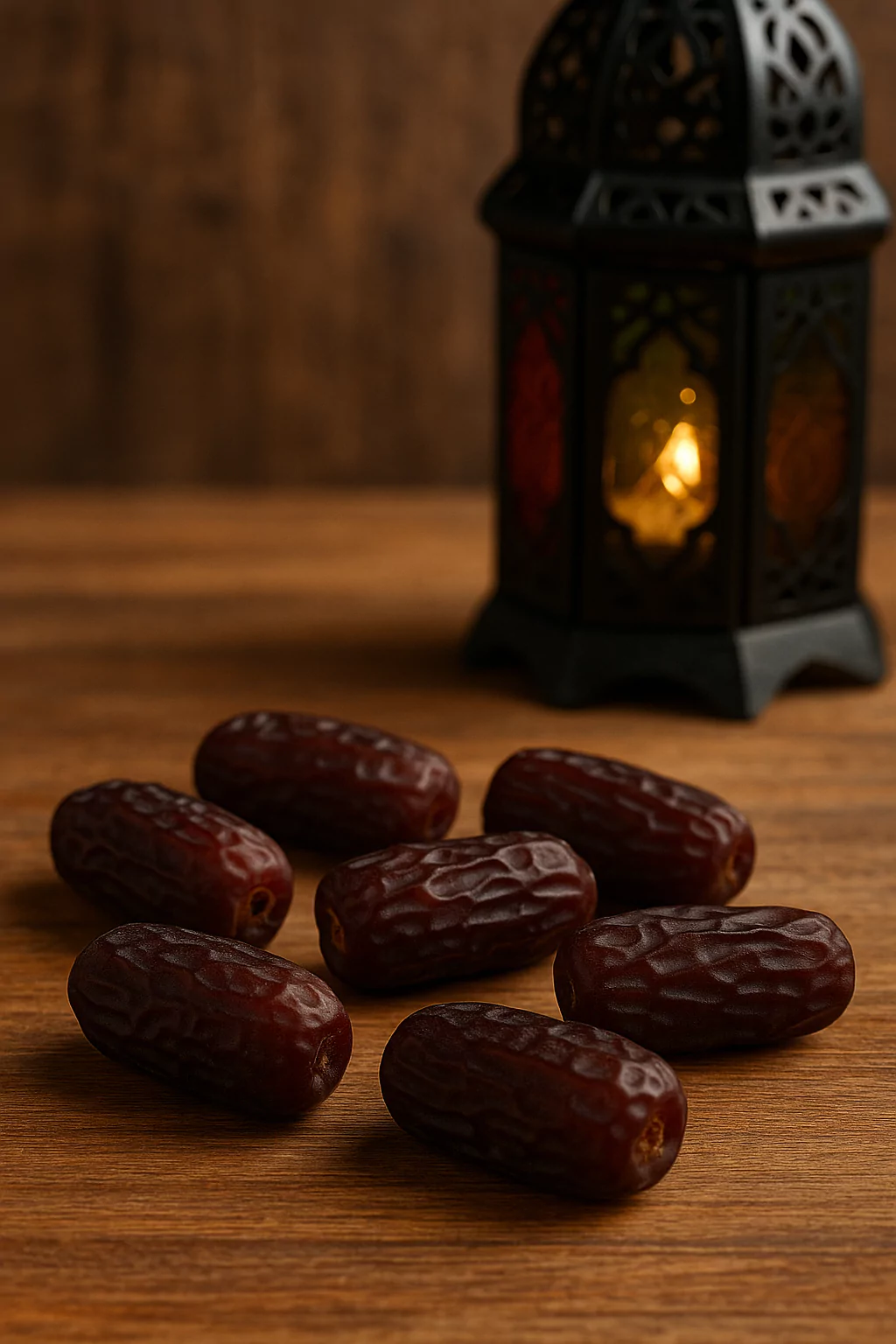
Kalmi dates are a semi-dry date variety with an elongated, slightly wrinkled shape and a deep amber-to-brown color. The name “Kalmi” is commonly used across Pakistan and parts of the Gulf to describe dates that are firmer in texture than soft varieties like Medjool, yet not as dry or fibrous as fully sun-dried dates. They typically have a mild, caramel-forward sweetness with a subtle earthy note, and a chewy, slightly fibrous bite that holds its shape well, which is why they are frequently used in cooking and baking rather than eaten only as a fresh snack.
Kalmi dates are grown extensively in the Khairpur and Sindh regions of Pakistan, one of the largest date-producing areas in South Asia. Because they are grown in large volumes and are less labor-intensive to cultivate than premium varieties like Ajwa dates, Kalmi dates tend to be significantly more affordable, making them a household staple rather than a specialty item. If you’re new to the wider world of date varieties, our complete guide to types of dates is a useful starting point.
Kalmi Dates Nutrition Facts
Like most dried date varieties, Kalmi dates are calorie-dense and naturally sweet, offering a concentrated source of fiber, potassium, and several trace minerals. The table below shows approximate values per 100 grams of pitted Kalmi dates, based on typical nutritional data for dried date varieties of similar moisture content.
| Nutrient (per 100g) | Approximate Amount | % of Daily Value* |
|---|---|---|
| Calories | 275–290 kcal | — |
| Total Carbohydrates | 70–74 g | 25% |
| Dietary Fiber | 6–7 g | 24% |
| Natural Sugars | 62–65 g | — |
| Protein | 2–2.3 g | 4% |
| Potassium | 650–690 mg | 14% |
| Iron | 0.9–1.1 mg | 6% |
| Magnesium | 40–45 mg | 10% |
*Percent Daily Values based on a 2,000-calorie diet. Values are approximate and can vary by harvest and growing conditions.
Health Benefits of Kalmi Dates
Kalmi dates share much of the nutritional profile common to dried dates in general, and research on dates as a category suggests several potential benefits worth understanding.
1. May Support Digestive Health
The dietary fiber in Kalmi dates may help promote regular bowel movements and support a healthy gut microbiome. Studies on date fiber suggest it can act as a mild natural laxative when eaten consistently as part of a balanced diet.
2. Natural, Sustained Energy Source
Because Kalmi dates contain a mix of glucose and fructose along with fiber, they may provide a steadier energy release compared to refined sugar, making them a popular pre- or post-activity snack in many South Asian households.
3. Rich in Potassium and Magnesium
Potassium and magnesium both play a role in muscle function and maintaining healthy blood pressure. Research indicates that potassium-rich foods like dates may contribute to cardiovascular wellness as part of an overall healthy diet.
4. Antioxidant Content
Dates, including Kalmi varieties, contain polyphenols and flavonoids. Studies suggest these compounds may help the body manage oxidative stress, though Kalmi dates have not been studied as extensively as Ajwa dates in this regard.
If you’re specifically interested in the deeper research behind date-based health benefits, our detailed page on the health benefits of Ajwa dates covers many of the same nutrients in more depth.
Quick Reference: Kalmi Dates at a Glance
Texture: Firm, semi-dry, chewy | Flavor: Mild caramel, slightly earthy | Main Growing Region: Sindh, Pakistan | Best Use: Everyday snacking, cooking, date paste | Price Point: Budget-friendly compared to Ajwa or Medjool
Kalmi Dates vs Ajwa Dates
This is one of the most searched comparisons among date buyers, and the confusion is understandable since both are common in South Asian and Middle Eastern markets. The core difference comes down to origin, texture, and purpose.
| Feature | Kalmi Dates | Ajwa Dates |
|---|---|---|
| Origin | Sindh, Pakistan | Madinah, Saudi Arabia |
| Texture | Firm, semi-dry, chewy | Soft, wrinkled, moist |
| Color | Amber to medium brown | Dark brown to near-black |
| Religious Significance | None specific | Referenced in Hadith |
| Typical Price | Budget-friendly | Premium |
| Best For | Everyday snacking, cooking | Special occasions, Ramadan, gifting |
Kalmi Dates vs Kimia Dates
Kimia dates are another variety frequently confused with Kalmi dates, largely because the names sound similar and both are widely available in the same markets. Kimia dates tend to be softer and glossier, with a richer, more concentrated caramel flavor, while Kalmi dates are firmer and slightly less sweet, with more chew.
If you’re deciding between the two for a specific recipe or health goal, our in-depth comparison covers taste, nutrition, and price differences: Kimia vs Kalmi Dates. You can also read more about Kimia dates on their own dedicated page: Kimia Dates.
Kalmi Dates vs Medjool Dates
Medjool dates, often called the “king of dates,” are large, exceptionally soft, and intensely sweet, with a caramel-like interior. Kalmi dates are smaller, firmer, and less moist, making them a more practical everyday option rather than a premium indulgence. Nutritionally, the two are fairly close, though Medjool dates tend to have a slightly higher calorie density due to their higher moisture and sugar concentration per date.
If you regularly cook with dates, keeping both on hand can be useful: Kalmi for cooking and baking where structure matters, and Medjool dates for recipes where a soft, rich texture is the goal.
How to Buy and Store Kalmi Dates
When buying Kalmi dates, look for a consistent amber-brown color, minimal sugar crystallization on the skin, and a texture that is firm but not rock-hard or overly dry. Avoid dates with visible mold, an overly sticky syrup coating, or a sour smell, as these can indicate improper storage.
Once purchased, Kalmi dates should be kept in an airtight container away from direct sunlight and humidity. For longer shelf life, refrigeration or freezing is recommended. Our complete guide on how to store dates walks through fridge, freezer, and pantry methods in detail so your dates stay fresh for months.
How to Eat and Cook with Kalmi Dates
Kalmi dates work well both as a standalone snack and as an ingredient. Their firm texture makes them particularly good for recipes that require some structural integrity, such as stuffed dates or chopped date toppings.
Popular Ways to Use Kalmi Dates
Try them in stuffed dates with nuts or cheese, blended into homemade energy balls similar to our no-bake date balls recipe, or incorporated into traditional sweets. For more inspiration, browse our full collection of desserts with dates.
Frequently Asked Questions
What are Kalmi dates?
Kalmi dates are a semi-dry date variety, often grown in Pakistan and parts of the Gulf, known for their firm texture, mild caramel-like sweetness, and elongated brownish shape. They are widely eaten fresh, dried, or used in everyday cooking.
Are Kalmi dates the same as Ajwa dates?
No. Kalmi and Ajwa dates are different varieties. Ajwa dates are grown almost exclusively in Madinah, Saudi Arabia, and are darker, softer, and carry religious significance. Kalmi dates are firmer, lighter in color, and are grown in a wider range of regions.
What is the difference between Kalmi and Kimia dates?
Kimia dates are typically softer and glossier with a richer caramel flavor, while Kalmi dates tend to be firmer and slightly less sweet. Both are popular in South Asian and Middle Eastern markets, but they come from different date palm cultivars.
Are Kalmi dates good for health?
Kalmi dates may help support digestion, provide natural energy, and supply dietary fiber, potassium, and iron. As with any dried fruit, they should be eaten in moderation as part of a balanced diet.
How many Kalmi dates should I eat per day?
Most nutrition guidance suggests 3 to 5 dates a day for healthy adults, though the right amount can vary depending on individual calorie needs and any underlying health conditions such as diabetes.
Do Kalmi dates have more sugar than Ajwa dates?
Sugar content is broadly similar across most dried date varieties, including Kalmi and Ajwa, since both are naturally high in fructose and glucose. Portion size matters more than the variety when managing sugar intake.
Is Kalmi dates vs Medjool dates a fair comparison?
Kalmi and Medjool dates differ mainly in size and texture. Medjool dates are large, soft, and caramel-like, while Kalmi dates are smaller, firmer, and slightly chewier, making them useful for different culinary purposes.
Where are Kalmi dates grown?
Kalmi dates are primarily cultivated in Pakistan’s Sindh and Khairpur regions, along with select growing areas in the Gulf, where the warm, dry climate suits the cultivar well.
How should I store Kalmi dates?
Kalmi dates keep best in an airtight container in a cool, dry pantry for a few weeks, or in the refrigerator for several months to preserve freshness and prevent sugar crystallization.
Can Kalmi dates be used in the same recipes as Ajwa dates?
Yes, Kalmi dates can generally substitute for Ajwa dates in recipes such as stuffed dates, date paste, and desserts, though the flavor and texture will differ slightly.
Which is better, Kalmi or Arabian dates like Ajwa?
Neither is objectively better; it depends on your goal. Ajwa dates are prized for religious significance and a soft, rich texture, while Kalmi dates are valued for affordability, firm texture, and everyday versatility.
Sources & References
- National Center for Biotechnology Information (NCBI) — Nutritional composition and health benefits of dates
- Healthline — Dates: Nutrition, Benefits, and How to Eat Them
- WebMD — Health Benefits of Dates
- Nutrition Journal — Dietary fiber and gut health research
- USDA FoodData Central — Dried fruit nutritional reference data